
Views: 0 Author: Site Editor Publish Time: 2026-04-24 Origin: Site
Facility managers and municipal planners face a persistent operational challenge. They must enforce traffic calming without causing vehicle damage or delaying emergency services. Traditional methods often fall short. Committing to permanent asphalt infrastructure brings high maintenance costs and severe road disruption. Communities need a better way to slow down drivers effectively.
Enter the heavy-duty TPU Speed Hump. This highly engineered, low-profile alternative offers a modern solution. It strictly controls vehicle speeds to a safe 10–15 mph range. It achieves this without jarring suspensions or damaging low-clearance cars. The design integrates smoothly into existing municipal landscapes.
We will evaluate this traffic calming solution across several critical baselines. You will learn about material durability and structural dimensions. We will also explore deployment logistics and application compliance. These criteria ensure you select the right infrastructure for your specific roadway requirements.
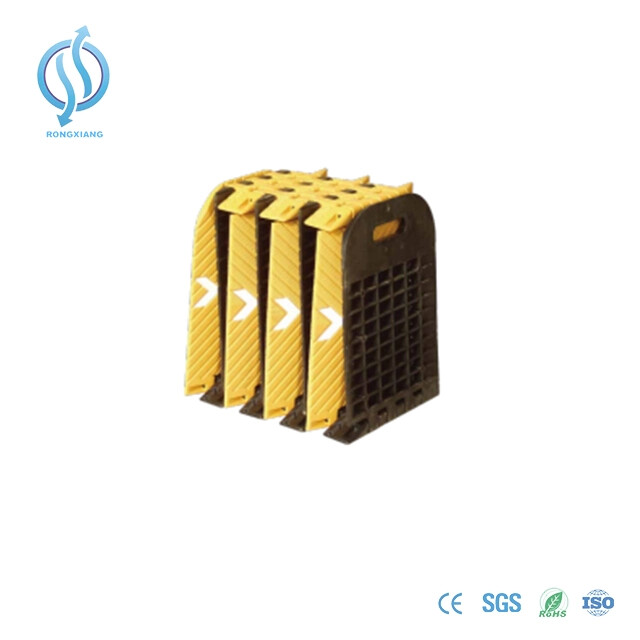
Material Superiority: Industrial-grade TPU material prevents cracking and fading, offering significant lifecycle advantages over traditional recycled rubber or asphalt.
Optimized Footprint: The 3000x250x25mm size spans standard traffic lanes efficiently, delivering a gentle, flat-top profile that slows traffic without bottoming out low-clearance vehicles.
Efficient Handling: At an exact 12kg weight, the unit bypasses heavy-machinery requirements, supporting rapid, single-person deployment.
Rapid Rollout: Engineered for tool-free installation in temporary setups, with clear hardware pathways for permanent anchoring in concrete or asphalt.
Selecting the right material dictates the lifespan of any traffic calming device. Legacy materials often fail under modern roadway stresses. They require constant upkeep and replacement.
Standard rubber suffers from vulcanization breakdown. Prolonged exposure to harsh UV rays dries out recycled rubber. It eventually becomes brittle and splits apart under heavy loads. Asphalt and poured concrete bring a different set of problems. They fall victim to freeze-thaw cracking. Moisture enters microscopic pores in the concrete. As temperatures drop, the water freezes and expands. This action shatters the surrounding infrastructure. Furthermore, installing asphalt demands high infrastructure disruption. You must close roads for days to pour and cure the material.
Modern engineering relies on advanced polymers. You can see this clearly when examining TPU material. Thermoplastic polyurethane bridges the gap between rubber's elasticity and plastic's rigidity. The material physics allow it to maintain structural integrity across extreme temperature gradients. It performs flawlessly from a freezing -40°C up to a scorching 80°C. It will not snap in winter or melt during summer heatwaves. It adapts dynamically to thermal expansion.
Maintaining roadway visibility drains facility budgets. Repainting faded asphalt stripes requires labor, road closures, and expensive traffic paints. TPU eliminates this ongoing maintenance cost. Manufacturers embed high-visibility color blocks directly into the polymer during injection molding. The bright yellow and black sections remain vivid throughout the product lifecycle. They resist fading even under intense, continuous sunlight.
Roadways expose traffic devices to severe environmental degradation. Motor oil drips from commercial trucks. Road salt saturates the ground during winter. Excessive moisture pools along the curb. Standard rubber absorbs oils and degrades quickly. TPU demonstrates exceptional chemical resistance against these localized threats. It repels corrosive automotive fluids and industrial salts. This chemical barrier significantly extends the operational life of the unit.
Performance Metric | Traditional Rubber | Poured Asphalt | Industrial TPU |
|---|---|---|---|
Temperature Tolerance | Prone to cracking in cold | Vulnerable to freeze-thaw | Stable from -40°C to 80°C |
UV Resistance | Low (fades and embrittles) | Moderate (paint fades fast) | High (embedded color blocks) |
Chemical Resistance | Poor against motor oils | Moderate | Excellent against oil and salt |
Installation Disruption | Low to Moderate | High (requires heavy machinery) | Very Low (single-person) |
Physical dimensions dictate how well a device controls traffic. Incorrect proportions lead to driver frustration and vehicle damage.
Municipal lanes typically measure between 9 and 12 feet wide. The 3000x250x25mm size perfectly addresses this standard. At nearly 10 feet long (3000mm), a single unit spans the majority of a standard traffic lane efficiently. Traditional smaller segments require complex multi-piece interlocking. Every joint in a modular setup introduces a weak point. Heavy vehicles eventually tear these joints apart. A continuous 3000mm span minimizes weak points. It provides robust lane coverage from curb to curb.
Height determines driver impact. Aggressive speed bumps sit 3 to 4 inches high. They force vehicles to a virtual halt and often damage low-hanging suspensions. Contrast this with the low-profile 25mm design. Measuring approximately 1 inch high and 250mm wide, it creates a gradual parabolic curve. This specific geometry safely reduces vehicle speeds to a target 10–15 mph. It calms traffic without jarring suspensions. It eliminates the risk of tire damage entirely. The flat-top profile ensures smooth tire transit.
Deployment logistics rely heavily on physical weight. A solid 12kg weight strikes a critical balance. The unit is heavy enough to resist shifting under aggressive traffic loads. Yet, it remains light enough to comply with safe single-worker lifting standards. Heavy rubber units often weigh upwards of 40 pounds per segment. They cause back injuries during deployment. The engineered TPU design protects your maintenance staff from lifting strains while securing the roadway.
A traffic calming device must survive constant punishment. Commercial environments subject these units to immense stress.
Municipal roads do not just serve passenger cars. They handle commercial delivery trucks, school buses, and waste management vehicles. These heavy vehicles exert multi-ton axle loads. The heavy-duty TPU structure features incredible compression resistance. It can easily withstand loads up to 20 tons without warping or flattening. The flexible yet resilient polymer memory allows it to compress slightly under extreme weight and immediately return to its original parabolic shape.
Safety during wet weather is paramount. Smooth plastics become dangerous slip hazards when raining. To mitigate skid risks, this unit features multi-directional, anti-slip surface textures. These engineered micro-patterns increase tire grip by up to 35% during heavy rain. They channel water away from the tire contact patch. This design prevents vehicles from sliding forward when applying brakes over the hump.
The underside architecture provides hidden operational value. If you turn the unit over, you will notice dual bottom channels. These serve two vital functions. First, they prevent water pooling. Rainwater flows freely beneath the hump, maintaining natural roadside drainage. Second, they act as a protective conduit. Facility managers frequently need to route temporary electrical cables or 3/4-inch hoses across roadways. These channels shield utility lines from crushing vehicle weight.
Labor efficiency defines modern facility management. You cannot afford to shut down active roadways for lengthy construction projects.
Avoiding road closures delivers massive business value. Poured asphalt requires extensive planning, specialized machinery, and days of curing time. Citizens and tenants complain about blocked access. In contrast, deploying TPU modular devices minimizes infrastructure disruption. A typical installation takes less than an hour per lane. You can secure a facility perimeter over a lunch break. The road opens to traffic immediately after placement.
Installation methods adapt easily to your specific site requirements. You have clear pathways for both short-term and permanent setups.
Temporary/Event Use: Festivals and temporary construction zones need rapid deployment. You can utilize a tool-free installation method. The modular interlocking ends connect securely. The product's natural weight holds it firmly in place for short-term traffic control. You simply unhook them when the event concludes.
Permanent Asphalt Rollout: Asphalt is softer than concrete. It shifts over time. For permanent asphalt anchoring, you must use steel spikes (typically 14" x 1/2") combined with heavy-duty washers. Drive the spikes through the pre-drilled holes directly into the asphalt base.
Permanent Concrete Rollout: Concrete requires rigid expansion hardware. You cannot use spikes. You must use lag bolts paired with expansion shields and washers.
Best Practice for Concrete Anchoring:
Position the unit on the concrete lane and mark the pre-drilled hole locations with chalk.
Move the unit aside and drill precise holes into the concrete using a masonry bit.
Insert the expansion shields into the drilled holes until they sit flush with the road.
Reposition the unit, drop the lag bolts with washers through the holes, and tighten them securely with a wrench.
Northern climates demand strict winter maintenance protocols. Heavy snowplow blades easily rip fixed traffic devices from the ground. This destroys both the hump and the plow blade. TPU units solve this reality effortlessly. Before the heavy snow season begins, workers simply unbolt the units and store them. The flush anchor points remain intact and level with the roadway. When spring arrives, workers retrieve the units and bolt them right back into the existing anchors.
Procurement errors happen frequently because buyers confuse industry terms. Knowing the exact difference ensures you buy the right tool for your specific traffic problem.
The terms "bump" and "hump" refer to distinct engineering profiles. They comply with different municipal regulations. Mixing them up leads to traffic flow disruptions and potential municipal code violations. We must define the technical differences clearly.
Feature | Speed Bump | Speed Hump |
|---|---|---|
Target Speed | 2–5 mph | 10–15 mph |
Profile Design | Short, aggressive rise (3-4 inches) | Wide span, gentle slope (approx. 1 inch) |
Primary Application | Parking lots, private driveways | Public roads, residential streets, hospitals |
EMS Impact | Severe deceleration required | Minimal disruption to response times |
Bumps feature short, aggressive profiles. They usually stand 3 to 4 inches tall but span less than a foot in width. They act as a sudden obstacle. They forcefully restrict speeds to a crawl of 2–5 mph. If a driver hits them faster, the car suffers a harsh shock. Due to this aggressive nature, safety standards restrict them strictly to parking lots, private driveways, and toll booths. You should never install them on public roads.
Humps represent the modern standard for general traffic calming. They feature a much wider span and a gentler slope. The 25mm rise allows wheels to roll over them smoothly. They are explicitly designed for 10–15 mph zones. They encourage a continuous, slow traffic flow rather than aggressive stop-and-go driving. This makes them the perfect fit for community roads.
Municipal planners must prioritize Emergency Medical Services (EMS). Ambulances and heavy fire trucks cannot tolerate aggressive bumps. A harsh bump forces an ambulance to brake completely, risking patient safety and delaying critical response times. Emphasize that the gentle 25mm rise of this TPU solution changes the dynamic. It allows emergency vehicles to maintain acceptable response speeds without severe deceleration. Because of this compliance, experts highly recommend them for school zones, hospital perimeters, and residential communities.
The strategic value of upgrading your traffic infrastructure is clear. You achieve high durability and zero-maintenance traffic calming with minimal installation overhead. By moving away from outdated rubber and disruptive asphalt, you protect both the roadway and the vehicles traveling upon it. The optimized profile guarantees safety without sacrificing efficiency.
Your next steps for procurement require a few simple actions. First, audit the exact width of your target roadways to determine volume needs. Second, determine the substrate of your roads—asphalt versus concrete—so you can specify the correct installation hardware. Finally, verify local municipal compliance regarding 10–15 mph traffic calming zones to ensure a seamless infrastructure upgrade.
A: Measure the total width of your target roadway in millimeters. Divide that number by 3000. It is best practice to leave a standard 1-to-2-foot gap at both curbs. This specific gap allows for proper roadside water drainage and provides a safe passage lane for bicycles.
A: No. The advanced structural flexibility of TPU far exceeds standard recycled plastics. It features a verified 20-ton compression limit per axle. It easily handles repetitive impacts from heavy commercial delivery trucks and waste management vehicles without warping or cracking.
A: Yes. The unit weighs exactly 12kg, placing it well within safe single-person lifting guidelines. The design includes pre-drilled holes that enable one worker to quickly position, align, and secure the hardware without requiring heavy lifting machinery or a large crew.
A: We strongly recommend removing the units prior to heavy snow plow seasons. Steel plow blades can damage surface-mounted devices. The modular design makes unbolting them highly efficient. You can store them safely inside while leaving the flush anchors intact for fast spring re-installation.
 English


