
Views: 0 Author: Site Editor Publish Time: 2026-04-25 Origin: Site
Facility managers and urban planners constantly grapple against failing roadway infrastructure. Heavy commercial vehicles destroy conventional traffic calming devices rapidly. These degraded units lose critical nighttime visibility. They also generate severe noise pollution during compression. You can solve this frustrating cycle of failure today. Upgrading to a premium TPU Speed Hump shifts your overarching strategy. It moves your operations from endless repairs to enduring reliability. This advanced material drastically reduces ongoing municipal maintenance burdens. Our comprehensive guide unpacks the distinct technical advantages of modern polyurethane. We evaluate essential safety compliance metrics needed for public road installations. We also detail the specific installation realities across various surface types. You will discover how to select the right device profile carefully. This ensures you meet your targeted speed zones perfectly. Ultimately, this resource empowers facility procurement teams. You can make confident, data-backed decisions for safer community roadways.
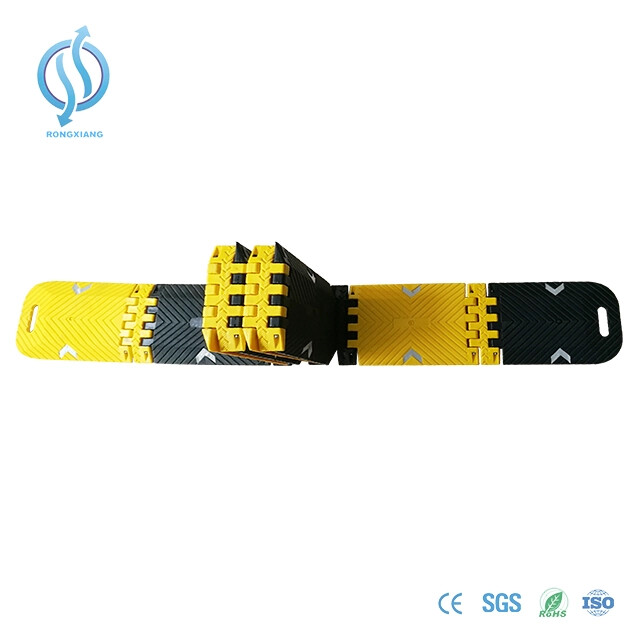
Material Superiority: Industrial-grade TPU outperforms recycled rubber by resisting extreme temperatures, chemical spills, and mechanical wear.
Engineered Visibility: Embedded reflective strips maintain up to 5-year visibility, directly addressing nighttime collision risks.
Compliance & Trust: Procurement risks are mitigated by selecting units that are ISO 9001 certified and SGS approved.
Versatile Deployment: Modular designs support dynamic lengths and distinct anchoring methods for asphalt, concrete, and complex gravel surfaces.
Traffic engineers constantly emphasize proper terminology. Many people mistakenly use "bump" and "hump" interchangeably. You must clarify this functional difference immediately. Matching the correct profile aligns your site to accepted engineering standards. We distinguish them based on physical aggression and targeted road speeds.
Speed bumps deliver highly aggressive control. Manufacturers design them specifically for 2-10 mph zones. They create a sharp, jarring jolt upon impact. These units work highly effectively for low-speed parking lots. They force distracted drivers to nearly halt. However, they severely disrupt standard traffic flows on regular roads. Vehicles driving too fast over a bump risk expensive suspension damage. Emergency response times also suffer drastically.
Speed humps provide gentle calming instead. Engineers design them for 10-15 mph zones. You often see them near school zones. Residential streets heavily utilize them as well. They offer a gradual, extended parabolic profile. This longer shape slows traffic smoothly without jarring impacts. You significantly reduce noise complaints from nearby homeowners. They also minimize unnecessary vehicle wear. Heavy trucks pass over them gracefully.
Your evaluation criteria must match the device profile to actual site needs. Consider your target speed limits carefully. You must also analyze the frequency of heavy commercial vehicles. We provide a structural comparison chart below. It simplifies your municipal decision-making process.
Feature Category | Speed Bumps | Speed Humps |
|---|---|---|
Primary Objective | Aggressive control (sharp jolt) | Gentle calming (smooth roll) |
Target Speed Zone | 2 to 10 mph | 10 to 15 mph |
Ideal Location | Parking lots, private alleys | School zones, residential streets |
Impact on Vehicles | High risk of suspension wear | Low risk, gradual transition |
Traditional rubber carries significant operational pain points. Standard vulcanized or recycled rubber degrades quickly outdoors. Constant UV exposure breaks down the surface polymers. Freeze-thaw cycles further compromise the inner structural integrity. Moisture penetrates microscopic cracks during autumn rains. Winter freezes expand this trapped water rapidly. These factors lead to brutal, brittle cracking. Facility teams then face continuous replacement costs. You constantly patch crumbling road sections.
Thermoplastic Polyurethane offers a superior solution entirely. It features a completely reorganized molecular structure. This chemistry provides exceptional flexibility under intense load. It also delivers massive durability gains over typical rubber. The material absorbs kinetic energy beautifully. It rebounds instantly to its original shape.
Environmental hazards rarely damage this material. It stands completely moisture resistant in harsh northern climates. It remains impervious to heavy water ingress. Road salts and automotive oils cannot penetrate its tight surface. These chemical defenses prevent internal structural swelling. Swelling commonly destroys lower-grade rubber materials in industrial parks.
Temperature tolerance marks another critical operational advantage. Thermoplastic maintains structural integrity across extreme climate variants. It performs flawlessly from -40°C up to 80°C. Heavy impacts in freezing conditions will not cause splintering. Blistering summer heat will not melt or deform the profile. Your safety investment survives year-round weather punishment.
Nighttime safety presents a massive challenge globally. Studies show 60% of vehicle-pedestrian incidents occur in low-light conditions. Painted rubber stripes fail to protect drivers adequately. Standard paint fades within months of deployment. Heavy axle friction simply erodes the coloring away. This leaves a dark hazard on the roadway. Drivers hit unseen obstacles at full speed.
Premium units solve this visibility deficit permanently. They utilize embedded, UV-resistant yellow reflective elements. They do not rely on cheap surface paint. This co-molded integration ensures excellent 5-year visibility under intense traffic conditions. High-frequency truck traffic cannot scrape the color off. The bright yellow sections contrast sharply against dark asphalt. Drivers spot the calming zone from hundreds of feet away.
Anti-slip surface engineering also protects vehicles. Bare rubber becomes dangerously slick during rainstorms. Premium designs feature specialized textured tread patterns. This engineered surface increases tire friction by up to 35%. You actively prevent skidding during wet weather conditions. Pedestrians also avoid slip-and-fall accidents when walking across them.
Authoritative validation builds necessary institutional trust. Enterprise and municipal procurement teams face strict liability rules. You must verify manufacturing standards rigorously. Always ensure your chosen factory is ISO 9001 certified for consistent quality management. You should also demand independent testing verification. Verify material safety and load claims are fully SGS approved before cutting a purchase order. These global certifications shield you from liability.
Commercial environments demand massive physical resilience. Standard rubber often compresses permanently under logistics trucks. A premium system supports heavy-duty transit easily. Manufacturers frequently rate them up to 44,000 lbs per axle. This equals roughly 20 tons of direct rolling weight. They perfectly suit commercial logistics hubs. Industrial parks also rely heavily on this immense strength. Forklifts and delivery vans cross them hundreds of times daily.
These devices also provide dual-purpose utility functions. Most premium designs feature built-in base channels. We often call them integrated cable protectors. They allow safe routing of hoses or wiring underneath. You can protect vital temporary lines during outdoor events. The hollow channels never compromise overarching structural strength. The arch design transfers top weight safely into the ground.
Modular scalability simplifies large-scale commercial deployments. You rarely find single continuous pieces for wide roads. Interlocking mid-sections and end-caps form the practical solution. Facility teams can build custom lengths on demand. You simply connect the puzzle-like edges together. You can span single residential lanes quickly. You can also cover massive commercial driveway entrances. This modularity makes replacing a single damaged section incredibly cheap.
Here are the core application scenarios perfectly suited for these systems:
School Zones & Hospitals: Gentle 10-15 mph speed reduction protects high-pedestrian traffic safely.
Logistics Terminals: 44,000-lb axle capacities support heavy 18-wheeler rigs easily.
Event Venues: Base channels protect power cables crossing busy pedestrian walkways.
Residential Neighborhoods: Low-noise rolling profiles keep local homeowners happy at night.
Proper installation guarantees long-term base stability. Poorly anchored devices migrate dangerously under heavy braking forces. You must adapt your approach based on the substrate. Following correct protocols eliminates future maintenance headaches.
Modular units minimize preparation and labor drastically. They weigh significantly less than concrete alternatives. A standard two-person team manages them easily. You can complete deployment in 15-20 minutes per lane. You never need heavy lifting machinery or cranes. This speeds up road reopening times.
Surface Type | Required Hardware | Engineering Challenge |
|---|---|---|
Concrete | 4.5" to 5" lag bolts + expansion shields | High shear forces require rigid expansion anchoring to prevent pull-out. |
Asphalt | 14" steel spikes or rebar pins | Asphalt shifts with temperature; requires deep sub-base penetration. |
Gravel Roads | Extended helical spikes + base-plates | Loose aggregates offer zero friction; requires wider stabilization. |
Different surfaces require unique anchoring methods. Please review these technical approaches carefully:
Concrete Surfaces: Concrete provides a rigid, unyielding base. You must drill specific pilot holes first. Installers use 4.5-inch to 5-inch lag bolts. You also need high-density expansion shields. These shields prevent pull-out under intense lateral shear forces.
Asphalt Surfaces: Asphalt behaves like a viscous liquid over time. It shifts under extreme temperature changes. Standard bolts will eventually pull loose easily. Asphalt demands 14-inch steel spikes or rebar pins. You must drive them deeply into the sub-base layer.
Gravel Roads (High-Risk Scenario): Gravel represents a high-risk installation environment. Loose aggregates offer zero friction for standard anchors. Typical installation fails rapidly here. You must use extended helical spikes. You also need wider structural base-plates. Sometimes deeper trenching becomes necessary to maintain stability. We advise extreme caution here.
We issue a strict risk warning regarding deployment. Never attempt temporary, "non-fixed" deployment in high-traffic zones. Unanchored units slide forward aggressively when heavy vehicles brake. This sudden movement creates severe trip hazards. It drastically escalates municipal liability risks. Always lock the device down mechanically.
Comparing traffic calming solutions requires a strategic mindset. You must prioritize long-term lifecycle value over initial unit costs. Evaluate the expected material lifespan accurately. Remember how advanced polymers vastly outlast traditional recycled rubber. You must also factor in extended visibility retention rates. Faded stripes cost money to repaint constantly.
Your next steps should focus on site assessment. Recommend auditing your specific deployment surface first. Decide whether you face asphalt, concrete, or complex gravel. Next, measure the exact required width. This determines your modular segment count perfectly. Finally, request manufacturer compliance documents. Always verify independent testing documentation before finalizing bulk procurement. Strong preparation ensures project success.
A: TPU generally lasts 3 to 5 times longer than standard recycled rubber due to higher abrasion and chemical resistance.
A: No. For safety and liability reasons, speed humps must be mechanically anchored; unanchored units will migrate under braking forces.
A: Premium models use embedded, co-molded reflective elements rather than adhesives or paint, securing up to 5-year visibility under standard high-volume use.
A: While MUTCD provides guidelines on road markings and signage, high-contrast yellow/black TPU humps support the visibility and speed-reduction thresholds recommended for private and municipal traffic calming.
 English


