Views: 0 Author: Site Editor Publish Time: 2026-09-11 Origin: Site
Nighttime driving accounts for only a quarter of total traffic volume but represents roughly half of all fatal crashes. This reality makes roadway visibility a massive infrastructure challenge. Relying solely on vehicle headlights to illuminate passive signage and standard traffic cones often fails. Adverse weather, complex work zones, and areas with high ambient light pollution easily overpower standard reflective materials. Procurement teams and safety engineers must balance strict compliance standards with the need to actively reduce incident rates. This guide evaluates the technical mechanics and deployment realities of traditional retroreflective sheeting versus active LED and solar-powered solutions. We will determine the most effective strategies for specific roadway conditions, focusing on visibility, reaction times, and environmental resilience.
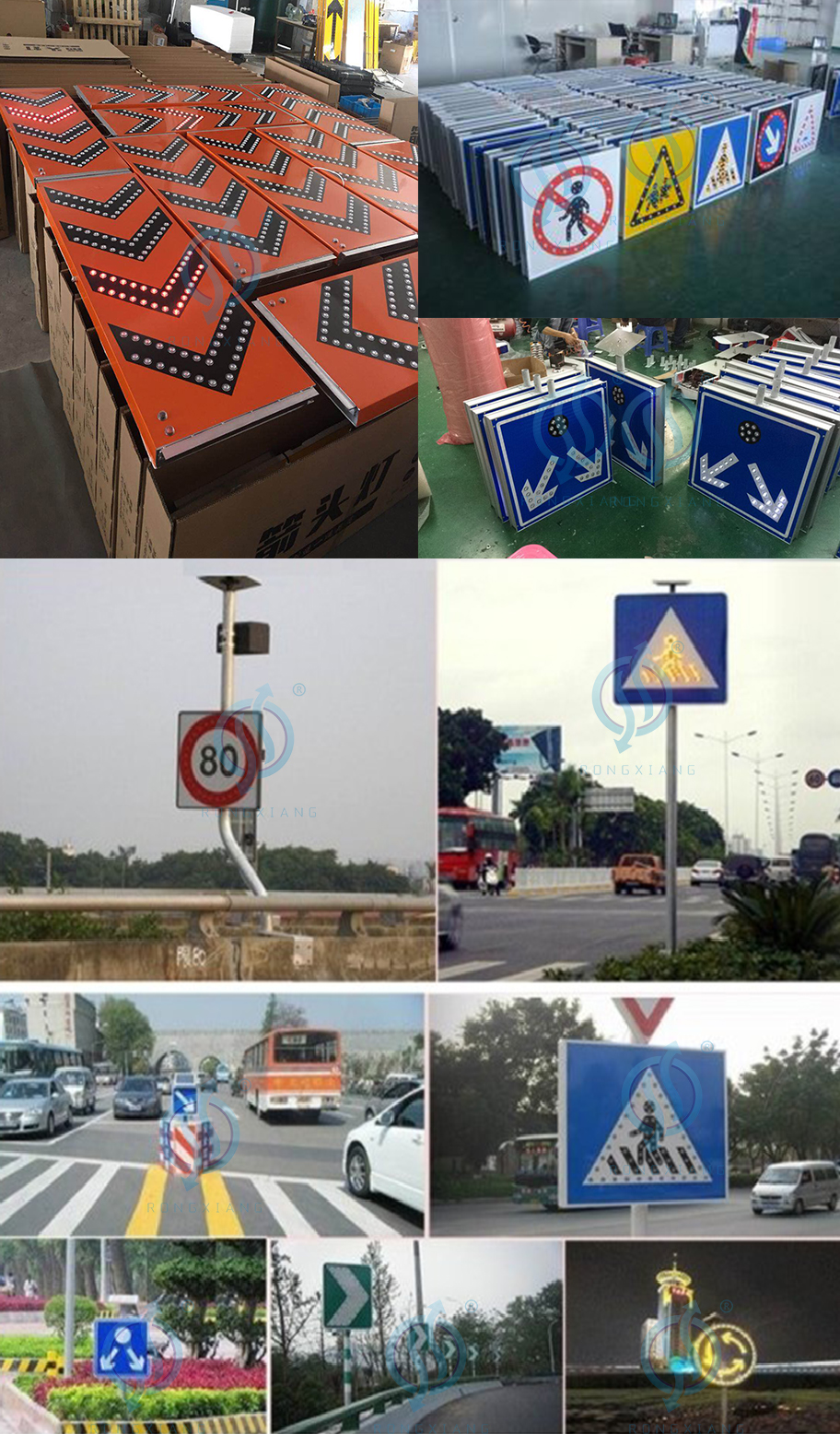
Active vs. Passive Visibility: A standard reflective traffic sign depends entirely on the angle and intensity of approaching headlights, whereas an LED traffic sign provides active, continuous visibility, increasing driver reaction time by hundreds of feet.
Cost-to-Lifespan Ratio: Reflective signs offer lower initial procurement and zero electrical maintenance costs. Conversely, solar LED signs require higher upfront capital but drastically reduce long-term accident liabilities in high-risk zones.
Regulatory Compliance: Both solutions must meet strict MUTCD (or local equivalent) standards. LED solutions require verifiable flash rates, dimming capabilities, and baseline retroreflectivity in case of power failure.
The Layered Approach: The most effective safety strategy rarely relies on a single technology. Optimal deployments utilize standard reflective signs for general route guidance and reserve custom LED traffic signs and sequential channelizers for critical hazard warnings and dynamic work zones.
Effective roadway signage relies entirely on the mathematical relationship between vehicle speed, required stopping distance, and sign legibility. A driver traveling at 55 miles per hour covers approximately 80.6 feet per second. Standard perception and reaction times average 2.5 seconds before the driver even applies the brakes. Total stopping distance at this speed easily exceeds 300 feet on dry pavement, and stretches much further on wet or icy roads. If a sign only becomes legible at 200 feet, the driver lacks the physical space to execute a safe stop or lane change. Infrastructure planners must deploy a road traffic safety sign that guarantees legibility well beyond these minimum stopping distances. Upgrading sign visibility directly translates to increased reaction time. This extra time drastically reduces rear-end collisions, roadway departures, and intersection incursions.
Nighttime visibility degrades rapidly during rain, fog, and snow. Standard reflective sheeting suffers from water film accumulation. When heavy rain coats a passive sign, the water alters the refractive index of the surface. Instead of bouncing back to the driver, the headlight beam scatters, rendering the sign dark and illegible. Fog presents a different challenge by suspending water droplets in the air. These droplets diffuse headlight beams before they ever reach the sign face. Active illumination solves this physics problem. Direct LED light pushes photons through fog and rain, establishing a clear visual target regardless of ambient moisture or headlight scatter. Snow accumulation also blocks passive microprisms. Active signs generate a small amount of heat, which can sometimes help shed light snow, but their primary advantage remains the active light punch through falling precipitation.
Highway authorities and private facility managers operate under strict legal obligations to maintain minimum retroreflectivity levels. The Federal Highway Administration (FHWA) and the Manual on Uniform Traffic Control Devices (MUTCD) mandate specific performance baselines for all roadway signage. Failing to meet these standards exposes organizations to severe legal liabilities following an accident. Deploying non-compliant, faded, or damaged signage constitutes negligence. Engineers must implement routine nighttime audits and utilize retroreflectometers to verify that every deployed unit meets or exceeds the required candelas per lux per square meter. Active signs must also maintain this baseline retroreflectivity. If the electronic components fail, the sign face must still perform as a standard passive warning device to ensure continuous compliance.
Passive signs do not generate light. They rely entirely on retroreflectivity, the physical process of returning light directly back to its source. When a vehicle's headlights strike a reflective traffic sign, the engineered surface catches the light rays and bounces them back toward the driver's eyes in a tight cone. Older technology utilized microscopic glass beads embedded in the sign material. These beads captured light but scattered a significant portion of it, resulting in lower return efficiency. Modern engineering relies on microprismatic technology. Microprisms act like microscopic mirrors arranged in precise geometric patterns. They capture headlight beams and return up to 80% of the light directly to the driver, vastly improving nighttime legibility and overall safety margins.
Procurement teams select from three primary grades of reflective sheeting, each offering different performance metrics and lifespans.
Engineer Grade (EG): Utilizes older glass-bead technology. It offers the lowest reflectivity and typically lasts five to seven years. Planners restrict EG sheeting to non-critical applications like parking lots or low-speed urban streets.
High-Intensity Prismatic (HIP): Features encapsulated microprisms. It returns significantly more light than EG and lasts up to ten years. HIP serves as the standard for most municipal and rural traffic signs.
Diamond Grade (DG3): Represents the highest tier of passive visibility. It utilizes full-cube microprisms that return light efficiently at wide angles. DG3 lasts over twelve years and is mandatory for interstate highways, overhead guide signs, and critical warning signs.
Work zones and emergency scenes rely heavily on temporary passive devices. Standard channelizer cones, drums, and delineator tubes utilize high-visibility reflective strips or bands. These bands maintain baseline visibility through vertical illumination from approaching headlights. When placed at regular intervals, these reflective devices create a continuous visual boundary, guiding motorists safely around hazards. Their low profile makes them susceptible to being obscured by larger vehicles or heavy snow accumulation. Field crews must ensure careful placement and frequent maintenance during active deployments to keep the reflective bands free of mud and road grime.
Passive signs carry inherent physical limitations. They depend entirely on the alignment and intensity of the approaching vehicle's headlights. Off-axis viewing presents a major problem. As vehicles navigate sharp curves or steep hills, their headlights point away from the sign face, leaving it completely dark until the last second. Modern vehicle fleets feature varying headlight heights. A low-riding sports car projects light differently than a lifted commercial truck, altering the retroreflective return angle. Passive signs also suffer from environmental degradation. Prolonged UV exposure breaks down the protective topcoat, while dirt, dust, and snow accumulation physically block the microprisms, instantly neutralizing their reflective properties.
Active illumination fundamentally changes how drivers perceive roadway hazards. An LED traffic sign breaks through visual clutter and combats driver fatigue far better than static lighting. Continuous flashing LEDs demand immediate attention, pulling the driver's focus away from dashboard screens or roadside distractions. Sequential flashing technology takes this a step further. Stackable, rechargeable sequential cone lamps communicate directionality. Instead of a random flashing pattern, sequential lights pulse in a coordinated wave, guiding the driver's eyes along the intended path of travel. This intuitive guidance reduces cognitive load and allows motorists to navigate complex lane shifts without hesitation.
Trenching for grid power is logistically impossible or prohibitively expensive for most rural intersections and temporary work zones. The modern solar traffic sign eliminates this barrier. These units feature high-efficiency photovoltaic panels integrated directly into the sign structure. They harvest solar energy during the day and store it in advanced lithium-iron-phosphate (LiFePO4) batteries. LiFePO4 technology outperforms traditional lead-acid batteries by offering deeper discharge cycles, longer operational lifespans, and superior performance in sub-zero temperatures. This off-grid capability allows safety engineers to deploy active warning systems in remote locations, ensuring continuous nighttime operation without utility connections.
Deploying extremely bright LEDs creates secondary hazards if not managed correctly. An "always on" high-intensity flash can cause temporary flash blindness for drivers navigating dark rural roads. Manufacturers overcome this by integrating ambient light sensors. These sensors monitor surrounding light levels and automatically dim the LED output as the sun goes down. The sign remains highly visible without causing glare. Programmable activation optimizes battery life and driver compliance. Radar-triggered signs remain dormant until they detect a vehicle approaching above the posted speed limit. This sudden activation breaks driver complacency and yields much higher braking compliance than a sign that flashes continuously.
Comparing passive and active signs requires looking at exact legibility distances. A brand-new Diamond Grade reflective sign provides excellent visibility, often becoming legible at 500 to 600 feet under ideal headlight conditions. An LED-enhanced sign pushes visibility well beyond 1,000 feet, even in poor weather. At highway speeds, this additional 400 feet translates to nearly five extra seconds of reaction time. Those five seconds allow a driver to process the warning, check their mirrors, and apply the brakes smoothly, preventing the sudden panic stops that cause cascading rear-end collisions.
Deploying infrastructure at scale requires analyzing logistical realities. Installing 100 passive reflective signs involves standard U-channel posts, minimal hardware, and rapid installation times. Inventory management remains straightforward, as the signs stack easily and require no climate-controlled storage. Conversely, deploying 100 solar LED signs introduces significant logistical weight. The inclusion of solar panels and battery housings increases the overall weight and wind load of the unit. Installers must follow strict procedures to ensure stability.
Excavate and pour concrete foundations for heavy-duty slip-base posts.
Mount the primary sign face using tamper-proof hardware.
Attach the solar array at the correct angle for the local geographic latitude.
Connect the internal battery housing and verify the NEMA enclosure seals.
Test the ambient light sensors and radar triggers before leaving the site.
The most resilient safety infrastructure utilizes a layered approach. Relying on a single visibility method creates a single point of failure. Engineers achieve optimal results by combining rigid reflective signs with active LED warning lights and smart channelizers. In this configuration, standard reflective signs handle general route guidance and baseline compliance. Active LED signs highlight critical hazards like sharp curves or pedestrian crossings. If environmental factors compromise the active LED components, the high-grade retroreflective sheeting on the sign face ensures the warning remains visible to approaching headlights. This redundancy guarantees continuous safety coverage.
Performance Metric | Passive Reflective Signs (DG3) | Active Solar LED Signs |
|---|---|---|
Visibility Range | 500 - 600 feet (headlight dependent) | 1,000+ feet (independent of headlights) |
Power Source | None required | Solar panel and internal battery |
Weather Resilience | Degrades in rain, fog, and snow | Maintains high visibility in adverse weather |
Maintenance Requirements | Routine cleaning, vegetation clearing | Battery replacement, panel cleaning, sensor checks |
Optimal Deployment Zones | General route guidance, speed limits, standard warnings | High-risk intersections, pedestrian crossings, sharp curves |
Electronic components introduce maintenance variables absent in passive signage. Battery degradation remains the primary risk for solar-powered units. Extreme heat accelerates chemical breakdown, while freezing temperatures reduce battery capacity. Mitigate these risks by specifying signs with easily accessible, modular battery compartments. This allows maintenance crews to swap batteries in the field without dismounting the entire sign. Engineers must size the solar array appropriately for the local geographic zone. A solar panel deployed in a northern latitude requires a larger surface area and a steeper mounting angle to harvest sufficient energy during short winter days.
Active signs carry a higher target value for theft and vandalism. The visible solar panels and electronic components attract tampering. Protect these assets by utilizing anti-theft mounting brackets and tamper-proof shear nuts that require specialized tools for removal. Protect the sign face and LED nodes by specifying polycarbonate protective shields that resist impact from rocks or debris. Elevating the installation height above standard reach also deters casual vandalism while maintaining optimal visibility for approaching motorists.
Procuring active signage requires rigorous supplier vetting. Do not accept unverified performance claims. When selecting a traffic sign manufacturer, demand third-party photometric testing reports to verify LED output and retroreflective compliance. Review the warranty terms specifically covering electronic components, solar panels, and battery life. Ensure the manufacturer maintains a transparent supply chain for replacement parts. A reliable supplier will provide modular components, ensuring that a single failed LED node does not require replacing the entire sign assembly.
Standard signage often fails to alter driver behavior at high-incident locations. When accident history data indicates a pattern of failure, planners must escalate to active warning systems. Wrong-way driver deterrents on highway off-ramps represent a critical use case. A custom LED traffic sign triggered by radar instantly alerts confused drivers before they enter the mainline traffic flow. Mid-block pedestrian crossings also require active intervention. Rectangular Rapid Flashing Beacons (RRFBs) paired with custom LED pedestrian signs yield significantly higher yielding rates from motorists compared to static crosswalk signs.
Temporary traffic control environments change by the hour. First responders and construction crews require highly visible, rapid-deployment tools to alter driver expectations instantly. Portable, custom-programmed LED signs allow crews to display specific hazard warnings based on real-time conditions. Collapsible traffic cones equipped with multi-purpose LED lights fit easily into emergency vehicle trunks. Police and fire personnel deploy these illuminated cones to secure accident scenes rapidly. The active flashing lights push traffic into adjacent lanes far more effectively than standard reflective cones, protecting the rescue crews working on the roadway.
Conduct a localized nighttime visibility audit of your current infrastructure using a retroreflectometer to identify faded or non-compliant passive signs.
Review three years of accident history data to pinpoint high-risk intersections that warrant an immediate upgrade to active LED illumination.
Request detailed specification sheets, third-party photometric lab reports, and warranty terms from certified manufacturers before placing bulk orders.
Implement a routine maintenance schedule for all deployed solar signs, focusing on panel cleaning and battery health checks before the winter season.
A: Solar panels typically last 10 to 15 years, while the LED nodes are rated for up to 100,000 hours of operation. The internal batteries generally require replacement every 3 to 5 years depending on climate. Ultimately, the degradation of the reflective sheeting on the sign face dictates the overall compliance lifespan, which usually ranges from 10 to 12 years.
A: Yes, provided they meet specific regulatory criteria. The MUTCD dictates exact flash rates, color matching requirements for the LEDs, and mandates that the sign face maintains baseline retroreflectivity. This ensures the sign remains visible and legally compliant even if the electronic components lose power.
A: High-Intensity Prismatic (HIP) uses encapsulated lenses and returns less light at narrow angles. Diamond Grade (DG3) utilizes full-cube microprismatic technology, returning significantly more light at wider angles. DG3 is required for high-speed highways and critical warnings, while HIP suits standard municipal roads.
A: Yes. Modern temporary traffic control utilizes collapsible traffic cones and stackable channelizers featuring rechargeable LED and sequential flashing technology. These devices are highly effective for emergency rescue and dynamic work zones, providing intuitive directional guidance to motorists.
A: Quality LED signs do not cause glare. They utilize built-in ambient light sensors that automatically dim the LED output as ambient light decreases. This auto-dimming feature prevents temporary flash blindness while maintaining optimal visibility in complete darkness.
A: Routine maintenance involves wiping down the solar panels to remove dust and bird droppings, clearing overhanging foliage that blocks sunlight, and testing the ambient light sensors. Crews must also schedule internal battery replacements every three to five years to ensure uninterrupted nighttime operation.
A: Yes. Active signs can be paired with radar or thermal sensors. This allows the sign to trigger illumination only when a speeding vehicle or specific hazard is detected. This targeted activation conserves battery power and drastically increases driver responsiveness by breaking visual monotony.
 English