 English
Views: 0 Author: Site Editor Publish Time: 2026-07-22 Origin: Site


Commercial facilities face strict liability and accessibility mandates where a single trip hazard or non-compliant doorway transition can result in regulatory fines, lawsuits, or workplace injuries. Selecting the right transition solution requires balancing heavy foot and wheeled equipment traffic, environmental wear-and-tear, and strict ADA compliance standards without requiring disruptive, expensive structural modifications. Facility managers and contractors must navigate various materials, load ratings, and configurations to find a durable, safe option that integrates seamlessly with existing architecture.
This guide breaks down the technical specifications, material trade-offs, implementation risks, and procurement criteria required to evaluate, specify, and source commercial-grade solutions. You will learn how to assess architectural transitions, verify load capacities, and choose the right rubber threshold ramp for your specific site requirements, ensuring long-term performance and regulatory alignment.
Load capacity and material density dictate lifespan: Commercial applications require high-density, vulcanized recycled rubber capable of supporting industrial equipment, pallet jacks, and heavy mobility devices without compressing.
Compliance is non-negotiable: Ramps must meet specific slope ratios (e.g., 1:12) and slip-resistance coefficients to mitigate facility liability and ensure safe access.
Installation environment drives specifications: Indoor versus outdoor placement impacts UV resistance requirements, drainage needs, and anchoring methodologies.
Supplier vetting reduces project risk: Partnering with a specialized commercial access ramp supplier or direct rubber threshold ramp manufacturer ensures access to custom configurations, certified materials, and scalable procurement for multi-site projects.
Evaluating the physical transition point is the first step in specifying a ramp. Swinging doors and sliding glass doors present unique mechanical challenges. You must clear delicate aluminum tracks without applying downward pressure that causes structural damage or impedes the door's rolling mechanism. Ramps must bridge these gaps seamlessly while allowing weather stripping and door sweeps to operate freely without catching on the ramp surface.
Curbs, sidewalks, and exterior landings require specific sizing and approach angles. These areas see a mix of wheeled delivery carts, hand trucks, and heavy municipal foot traffic. Single-step rises up to 9 inches demand robust, stable solutions. These elevated transitions require code-compliant ramp systems that will not shift under dynamic loads, often necessitating modular builds rather than single-piece extrusions.
When assessing the site, contractors should measure the exact vertical rise at the highest point, the available run distance before intersecting with other architectural features, and the required width to accommodate the largest expected equipment. Failure to account for door swing direction or landing pad depth often results in unusable installations.
Inadequate transition heights carry significant legal and financial implications. ADA, OSHA, and local building code violations expose facilities to severe regulatory risks. Failing to provide compliant access can trigger immediate citations, stop-work orders, and costly remediation mandates. Liability claims from trip-and-fall incidents further compound these risks, often resulting in payouts that dwarf the cost of proper ramp installation.
High-traffic commercial zones experience intense operational wear-and-tear. Delivery carts, bariatric wheelchairs, and heavy footfall apply constant physical stress to doorway thresholds. Substandard materials quickly compress, crack, or shift out of alignment. This degradation recreates the exact trip hazards the ramp was installed to eliminate, creating a false sense of security for facility managers.
Evaluating materials requires looking beyond initial installation to long-term performance. Rubber offers superior impact absorption compared to metal alternatives. It provides excellent acoustic dampening, significantly reducing the clattering noise of wheels in busy commercial spaces like hospitals or office lobbies. The natural traction of rubber enhances safety for both pedestrians and wheeled equipment, even in wet conditions.
Performance Metric | Vulcanized EPDM Rubber | Aluminum / Metal | Concrete / Masonry |
|---|---|---|---|
Impact Absorption | High (Compresses slightly under extreme loads, rebounds fully) | Low (Prone to permanent denting from heavy impacts) | Zero (Chips or cracks under heavy point loads) |
Acoustic Dampening | Excellent (Absorbs wheel noise and footfall vibrations) | Poor (Amplifies hollow sounds and clattering) | Moderate (Reflects sound, no hollow echo) |
Natural Traction | High (Inherent slip resistance, maintains grip when wet) | Variable (Relies entirely on applied grit tape or punched treads) | Moderate (Requires broom finish or applied coatings) |
Installation Speed | Fast (Can be trimmed and placed in minutes) | Moderate (Requires assembly and anchoring) | Slow (Requires forming, pouring, and curing time) |
Competitors often claim that rubber degrades faster in severe weather than aluminum. This is a misconception based on residential-grade materials. Commercial-grade, UV-treated vulcanized EPDM rubber resists cracking and dry-rotting. It withstands extreme temperature fluctuations from -40°F to 140°F far better than lower-grade alternatives, maintaining its structural integrity through freeze-thaw cycles that would otherwise heave concrete or warp thin metals.
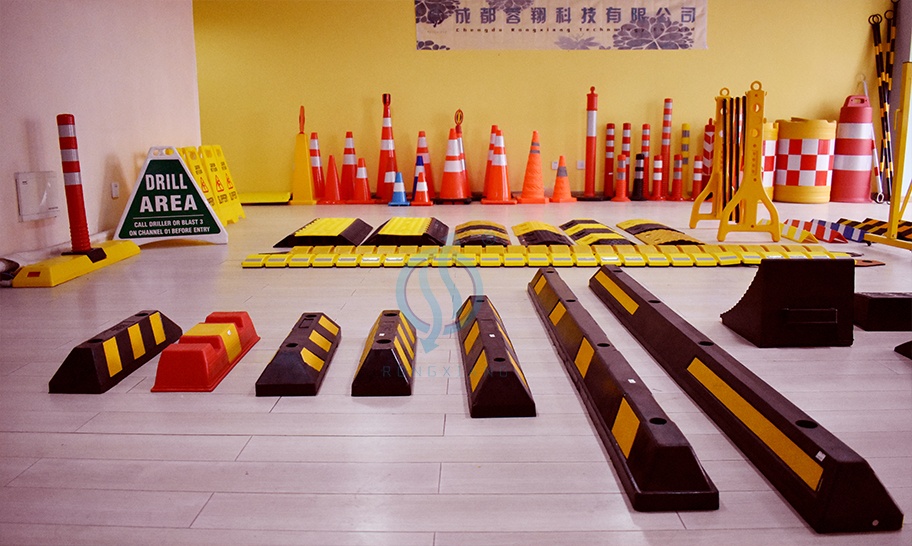
Standard solid configurations are ideal for standard commercial doorways. They work exceptionally well for single-step rises with consistent heights, typically ranging from 1/2 inch up to 4 inches. These units arrive ready to install and provide immediate, stable access over minor architectural barriers without the need for complex assembly.
However, they do have limitations. Fixed heights mean they cannot adapt to settling concrete or changing floor levels over time. Their heavy physical weight makes them difficult to relocate frequently, though this weight contributes to their stability. They are best suited for permanent or semi-permanent installations where the transition height remains static and the substrate is relatively flat.
Modular systems excel in complex environments. They are best for uneven surfaces, extra-wide entrances, or variable heights that exceed standard extrusion limits. These systems allow facility teams to build out a custom transition using standardized components, stacking and locking pieces to achieve the exact required rise.
Proper installation relies on the straight-edge alignment technique. You align and lock the straight edges of multiple modular ramps together using integrated dovetail joints or hidden connector pins. This creates one solid, continuous piece accessible from the left, right, and center. It is highly effective for wide double-doors, active loading bays, or expansive retail entrances.
Scalability is a major advantage here. You can easily add or remove sections as facility layouts change. If operational needs dictate a wider approach for new material handling equipment, you simply interlock additional modular units to the existing setup rather than replacing the entire ramp system.
Industrial environments often require extreme load ratings. Non-standard rises, sometimes reaching up to 9 inches or higher, demand specialized solutions. Standard catalog items typically fall short in these demanding scenarios, either failing to meet the required slope ratio or lacking the structural density to support forklifts and heavy machinery.
In these cases, you must engage a specialized custom threshold ramp supplier. They provide custom dimensions, reinforced edges, and specific architectural matching. This procurement route ensures the final product safely supports your heaviest equipment while maintaining strict compliance with local safety regulations.
Correct slope ratios are fundamental for commercial public access. The standard requirement is a 1:12 slope ratio. This means for every one inch of rise, you need twelve inches of ramp run. Some jurisdictions allow a 1:10 ratio for secondary access or historic buildings with space constraints, but 1:12 remains the safest commercial baseline to prevent wheelchair rollback and reduce exertion.
Width and clearance dictate usability. A minimum of 36 inches of clear width is required between handrails or edge protection. However, 48 inches is preferred to ensure safe clearance for bariatric wheelchairs and commercial material handling equipment. Molded beveled edges are also necessary on the sides of the ramp. They facilitate safe, multi-directional approaches and prevent tripping at the ramp's perimeter when pedestrians approach from an angle.
Material density directly impacts performance and longevity. Lightweight residential-grade rubber compresses under heavy loads, creating a spongy feel that is dangerous for mobility devices. Commercial-grade high-density vulcanized rubber maintains its structural integrity. It resists deformation even under the weight of motorized carts, hospital beds, and pallet jacks.
Application Type | Required Load Capacity | Typical Traffic Profile |
|---|---|---|
Light Commercial | 850 lbs - 1,000 lbs | Pedestrians, manual wheelchairs, light utility carts |
Heavy Commercial / Medical | 1,500 lbs - 2,500 lbs | Bariatric power chairs, hospital beds, loaded hand trucks |
Industrial / Warehouse | 5,000 lbs - 10,000+ lbs | Pallet jacks, forklifts, heavy material handling equipment |
Always verify weight capacities before purchasing. Request independent load testing data to confirm these specifications. A ramp that fails under load not only destroys the product but creates an immediate, severe safety hazard for the user and the facility.
Surface traction prevents slip-and-fall accidents. Molded slip-resistant tread patterns are essential, providing mechanical grip for shoes and tires. Verify the Coefficient of Friction (COF) ratings for both wet and dry conditions. High COF ratings ensure the ramp remains safe during rain, snow, or routine floor cleaning operations.
Outdoor applications require specific exterior specifications. Demand UV-resistant compounds to prevent sun damage, fading, and brittleness over time. Built-in drainage channels are also critical for exterior doors. They prevent water pooling and ice formation, which can compromise the ramp's natural traction and cause water ingress into the building.
Surface preparation dictates long-term stability. Placing ramps on degraded thresholds, cracked asphalt, or uneven concrete causes rocking. This movement leads to premature wear, damages the door sill, and creates a dynamic trip hazard. Always repair, patch, and level the underlying substrate using commercial-grade leveling compounds before installation.
Choosing the right anchoring method prevents shifting under heavy dynamic loads. Industrial adhesives (like polyurethane construction adhesive) work well for permanent indoor placements on tile or concrete. Heavy-duty double-sided butyl tape offers a secure but removable option for leased spaces. Mechanical fasteners, like wedge anchors or Tapcons, provide the highest security for exterior, high-traffic zones where snowplows or heavy vehicles operate nearby.
Field trimming ensures a perfect fit. High-density rubber can be trimmed or scribed on-site to match irregular door frames. Use a sharp utility knife with a fresh blade, scoring the material deeply before snapping, or use a fine-toothed circular saw for long, straight cuts. This allows the ramp to fit snugly around complex door jambs, mullions, and architectural trim without leaving dangerous gaps.
Identifying wear early extends the product's lifespan. Inspect lower-quality rubber for signs of UV degradation, edge crumbling, or compression tracks from heavy wheels. High-density vulcanized rubber resists these issues, but routine checks remain necessary for overall facility safety and compliance verification.
Establish a seasonal inspection and mitigation protocol. Clear debris, leaves, and ice melt chemicals from drainage channels regularly. Check mechanical anchoring points for tightness after severe weather or heavy snow removal operations. Wash the surface with a mild detergent and a stiff deck brush to remove grease and dirt that can lower the surface friction coefficient.
Direct sourcing offers distinct advantages for large-scale projects. Buying direct from a rubber threshold ramp manufacturer provides better customization options, allowing you to specify exact widths, custom bevels, and specific rubber compounds. It also ensures bulk lead times are met efficiently for multi-site rollouts. Alternatively, sourcing from a broad roadway safety equipment supplier offers a wider catalog. This allows for bundled shipping of multiple safety assets, such as parking blocks, speed bumps, and corner guards, streamlining the procurement process.
Assess critical vendor metrics before issuing a purchase order. Evaluate lead times, bulk order fulfillment capabilities, and custom fabrication services. A reliable threshold ramp project supplier will offer strong commercial warranties, dedicated technical support, and clear installation documentation.
Documentation checks are mandatory for commercial compliance. Request material safety data sheets (MSDS) and ADA compliance certifications. Verify flame-spread ratings if installing in interior egress corridors, and review independent load testing data. This documentation protects your facility from liability during fire marshal inspections and ensures product performance matches your site requirements.
Commercial-grade rubber threshold ramps offer superior traction, acoustic benefits, and durability compared to metal or concrete alternatives. When specified correctly for the environment and load requirements, they solve complex access challenges safely and efficiently. Buyers must prioritize ADA compliance, certified load ratings, and environmental suitability over upfront unit costs to ensure long-term success and mitigate facility liability.
Measure the exact vertical rise of your threshold and calculate the required run distance to achieve a 1:12 slope.
Assess the installation environment to determine necessary UV resistance, drainage features, and required load capacities.
Select the appropriate anchoring method (adhesive, tape, or mechanical fasteners) based on your substrate and expected traffic volume.
Consult with a qualified supplier to request technical data sheets, compliance certifications, and project quotes.
A: Standard solid rubber models typically accommodate rises up to 4 inches. However, specialized commercial modular systems and custom configurations can safely bridge single-step rises up to 9 inches while maintaining required slope ratios.
A: Anchoring depends on the substrate and permanence. Use mechanical concrete anchors for heavy-duty exterior applications. Industrial adhesives work well for permanent indoor tile or concrete. Heavy-duty double-sided butyl tape provides a secure, semi-permanent hold without drilling.
A: No. ADA compliance depends on specific dimensions, not just the material. The ramp must meet the 1:12 slope ratio, provide adequate clear width (minimum 36 inches), and feature proper edge treatments to be considered fully compliant for public access.
A: High-density, vulcanized commercial rubber ramps typically support between 850 lbs and 1,500 lbs. Industrial-grade models designed for heavy machinery and vehicles can support up to 10,000 lbs without structural deformation.
A: Yes. Commercial-grade rubber can be field-trimmed. Installers can use a sharp utility knife, jigsaw, or circular saw to scribe the edges, allowing the ramp to fit perfectly around complex door jambs and architectural trim.
A: UV-treated, vulcanized EPDM rubber ramps can last a decade or more outdoors. They resist cracking and temperature extremes (-40°F to 140°F) exceptionally well. Unlike aluminum, they will not dent from heavy impacts or corrode over time.
A: Commercial-grade ramps use high-density vulcanized rubber designed for heavy, dynamic loads like pallet jacks. Residential-grade ramps use lower-density foam or recycled rubber blends that can compress, crumble, or degrade quickly under commercial traffic.