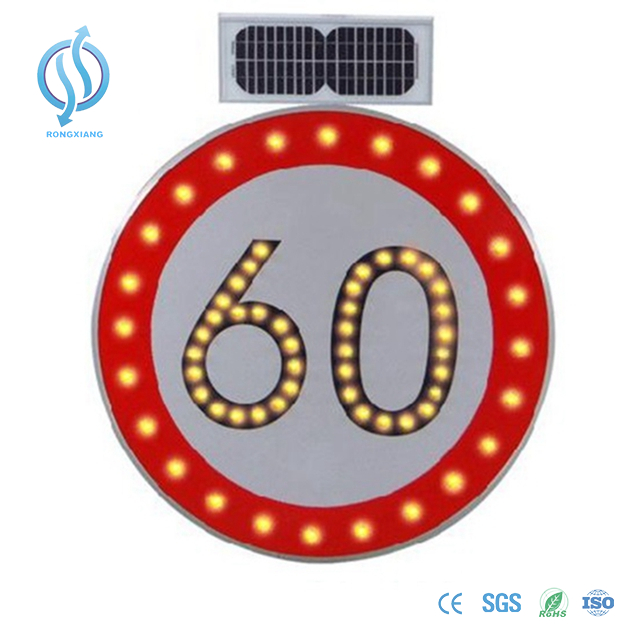
Views: 0 Author: Site Editor Publish Time: 2026-11-03 Origin: Site
Road safety and infrastructure projects face a constant tension. You must maximize visibility to reduce accident rates while managing strict procurement budgets. Finding the right balance often dictates the success of a roadway upgrade. Traditional retroreflective technology has served as the standard for decades. It provides a reliable, low-cost baseline for driver awareness. However, the integration of active illumination has shifted procurement standards, particularly for high-risk zones.
Planners now struggle to justify the higher initial costs of modern alternatives against their undeniable safety benefits. We will provide traffic engineers, city planners, and facility managers with a transparent, evidence-based evaluation framework. You will learn how to choose between active solar-powered infrastructure and passive reflective signage. This guide breaks down visibility mechanics, lifecycle costs, and strategic deployment strategies to fit your specific project needs.
Understanding the core mechanics of roadway signage helps you make informed procurement decisions. Both technologies aim to achieve the same goal, but they use entirely different methods to capture driver attention.
Passive signage represents the backbone of global roadway infrastructure. reflective traffic signs use engineered glass beads or advanced micro-prismatic technology. These specialized materials catch the light emitted by vehicle headlamps. They then bounce that light directly back to the source. This optical trick creates a bright, visible surface for the driver.
This passive system works flawlessly under ideal conditions. It requires no electricity and contains no moving parts. However, it carries a severe limitation. The technology fails if the approaching vehicle's headlights are off. It also underperforms if headlights are misaligned. Furthermore, passive retroreflectivity struggles when obscured by heavy rain, snowfall, or dense fog. The sign essentially disappears when the light source gets compromised.
Active signage takes a completely different approach to infrastructure safety. solar traffic signs combine high-efficiency photovoltaic panels with energy storage systems. They typically utilize lithium-ion or Absorbent Glass Mat (AGM) batteries. These internal power reserves drive high-intensity light-emitting diodes (LEDs) embedded in the sign face.
The primary advantage of this system is guaranteed baseline traffic sign visibility. It performs perfectly regardless of vehicle lighting or severe weather. The active LEDs create an "impossible to miss" visual footprint. Drivers notice the flashing lights from significantly further distances.
Furthermore, modern active signs offer advanced IoT integration. You can integrate these units with doppler radar or thermal sensors. They will flash only when they detect an approaching vehicle or pedestrian. This trigger-based activation conserves battery life while aggressively commanding driver attention exactly when needed.
Procurement teams cannot evaluate roadway infrastructure based on sticker price alone. You must analyze the complete financial lifecycle of the asset. This includes initial purchase, installation, ongoing upkeep, and eventual replacement.
Standard reflective panels represent a minimal baseline cost. They remain highly affordable for mass deployment across thousands of miles of highway. Conversely, solar-powered equivalents require a significantly higher initial investment per unit. This price premium stems entirely from the electrical components. You are paying for monocrystalline panels, charge controllers, batteries, and weather-sealed LED modules.
Installation costs often change the financial narrative. Solar units eliminate the need for costly trenching. You avoid tearing up asphalt to lay conduit. You also bypass expensive cabling and municipal grid connectivity fees. Therefore, solar panels act as a highly cost-effective alternative to hardwired AC-powered signals. Hardwired systems require specialized electrical contractors and extensive permitting. Solar units deploy quickly, independently, and with minimal labor overhead.
| Factor | Passive Reflective Signage | Active Solar Signage |
|---|---|---|
| Initial CapEx | Low ($50 - $150 per unit) | High ($1,000 - $3,000+ per unit) |
| Installation Labor | Minimal (Standard post mounting) | Moderate (Requires panel alignment) |
| Grid Connection Fees | None | None (Completely off-grid) |
| Routine Maintenance | Surface cleaning only | Panel cleaning, battery testing |
| Component Lifespan | 7-10 years (UV degradation) | 3-5 years (Battery replacement) |
Every piece of infrastructure carries hidden operational costs. You must plan for these expenses during the budgeting phase.
You must factor in the potential cost savings of reduced collision incidents. Fewer accidents mean lower associated liability for the municipality. This becomes especially relevant at notoriously dangerous intersections. The initial CapEx transforms into long-term savings when you prevent major collisions and save lives.
Savvy traffic engineers do not view these technologies as mutually exclusive. They represent different tools for different jobs. Mapping the right solution to the right environment ensures maximum safety and budget efficiency.
Passive signs serve as the reliable workhorse of your infrastructure network. You should prioritize them in the following scenarios:
Active solar powered road signs act as specialized interventions. You should deploy them strategically to solve specific safety challenges:
Deploying advanced technology outdoors introduces unique physical and environmental challenges. You must anticipate these implementation risks to ensure long-term system reliability.
Solar energy systems rely entirely on the sun. Sustained cloudy or winter days can quickly drain battery reserves. This failure typically happens if the solar panel is undersized or poorly oriented. Furthermore, extreme cold acts as the natural enemy of energy storage. Freezing temperatures can severely degrade standard lithium battery capacity.
Best Practice: Specify specialized thermal enclosures for battery banks in northern climates. You can also request alternative battery chemistry, such as Lithium Iron Phosphate (LiFePO4), which performs much better in freezing temperatures.
Solar panels and external batteries represent high-value targets for thieves. Vandals often strip these components from unguarded rural intersections. A stolen battery renders the entire safety device useless.
Common Mistake: Mounting batteries in easily accessible, ground-level cabinets.
Best Practice: Specify units with integrated, top-of-pole mounting systems. Keep the valuable components high above the ground. You should also demand impact-resistant polycarbonate shielding. This tough plastic layer protects the vulnerable LED components from thrown rocks and debris.
Bright, flashing LEDs command attention, but they also create light pollution. Continuous flashing in residential areas frequently leads to neighborhood complaints. Citizens dislike strobe effects entering their bedroom windows at night.
You can mitigate this problem effectively. Utilize ambient light sensors for automatic dimming during nighttime hours. The LEDs will shine brightly during the day and soften after dark. Better yet, deploy radar-triggered activation. The system will remain dark until it detects an approaching vehicle, flashing only on approach. This strategy preserves community goodwill while maximizing safety.
You cannot install unverified equipment on public roadways. All procured devices must meet strict federal and state regulatory standards. Ignoring these frameworks opens your municipality to severe legal liability in the event of an accident.
Ensure any procured LED traffic signs strictly conform to the Manual on Uniform Traffic Control Devices (MUTCD). This federal framework dictates how safety devices must operate.
You must verify the flash rates. The MUTCD typically mandates a flash frequency of 50 to 60 flashes per minute. Color compliance also remains strictly regulated. A stop sign must flash red LEDs, while a pedestrian crossing must flash yellow. Finally, you must ensure retroreflective background requirements are met. A solar sign must still function passively if the battery dies. The base material must bounce light just like a standard panel to provide a fail-safe mechanism.
Many state agencies publish their own rigorous guidelines that go beyond federal minimums. For example, guidelines from agencies like the Minnesota Department of Transportation (MnDOT) dictate heavy-duty physical performance.
You must highlight specific impact-testing certifications. Look for NCHRP 350 or MASH (Manual for Assessing Safety Hardware) certifications. Active signs require heavy, reinforced poles to hold the solar panels and battery banks. These heavy poles must break away safely during a vehicle collision. You cannot compromise on physical crashworthiness when upgrading your intersections. The infrastructure must yield to protect the vehicle's occupants.
Do not view this technology as a 1:1 replacement for your entire network. Instead, treat it as a tiered approach. Use traditional reflective signage for your broad infrastructure foundation. Deploy active solar panels strategically at high-risk "pain points." This balanced strategy optimizes your budget while maximizing public safety where it matters most.
You must conduct a localized risk assessment for your target intersections. Compare the historical incident rate against the projected deployment cost. Identify the specific blind curves and crosswalks where active illumination will provide the highest return on investment in terms of accident reduction.
Consult with a compliance-certified manufacturer today. Request a detailed photometric analysis for your specific traffic zone. Ask the vendor for a pilot deployment program. Testing a single unit in your unique local environment provides the empirical data needed to justify a broader municipal rollout.
A: The internal batteries generally last between 3 to 5 years. This lifespan depends heavily on the frequency of activation, the specific battery chemistry used, and your local temperature extremes. Cold climates typically degrade battery life faster than temperate zones.
A: Yes, high-quality units store a multi-day energy reserve. This concept, known as autonomy, allows the battery to remain operational during extended low-light or snow-covered periods. However, prolonged blockage by heavy snowpack ultimately requires manual clearing to resume charging.
A: Yes, provided they meet strict MUTCD guidelines. They must adhere to rules regarding flash frequency, which is typically 50 to 60 flashes per minute. They must also maintain the correct sign shape, color, and baseline background reflectivity.
A: Yes, it is highly cost-effective. Many manufacturers offer dedicated retrofit kits. These kits attach solar panels and LED components directly to your existing standard posts. This approach saves you the considerable cost of entirely new signpost installations and concrete footings.
 English