
Views: 0 Author: Site Editor Publish Time: 2026-03-17 Origin: Site
Is your parking lot truly compliant? A properly installed Wheel Stop does far more than mark the end of a space. It protects buildings, controls vehicle overhang, and preserves safe pedestrian access. When standard dimensions and ADA clearance rules are followed precisely, parking areas become safer and legally compliant. In this article, you will learn correct sizing, placement distances, measurement standards, and inspection practices to ensure every Wheel Stop supports accessibility, safety, and long-term performance.
Industry practice sets the typical Wheel Stop length at 6 feet, which fits standard 9-foot-wide parking stalls. This length ensures tires contact the bumper evenly, reducing vehicle overhang. Heights usually range from 4 to 6 inches, allowing the stop to block tires without creating unnecessary pedestrian obstacles. A width of 8 to 10 inches gives it stability under repeated impact. When height exceeds 6 inches, pedestrian visibility and stepping clearance decrease, increasing trip risk in busy lots.
Correct placement defines performance. Install each Wheel Stop 3 to 6 inches behind the painted front parking line. This keeps vehicles fully inside the stall while protecting sidewalks or structures. Maintain 2 to 3 feet of clearance from adjacent walkways to prevent bumper overhang. Always center the stop within the stall width and align it perpendicular to striping. When aligned precisely, it creates predictable stopping behavior for drivers and improves lot organization.
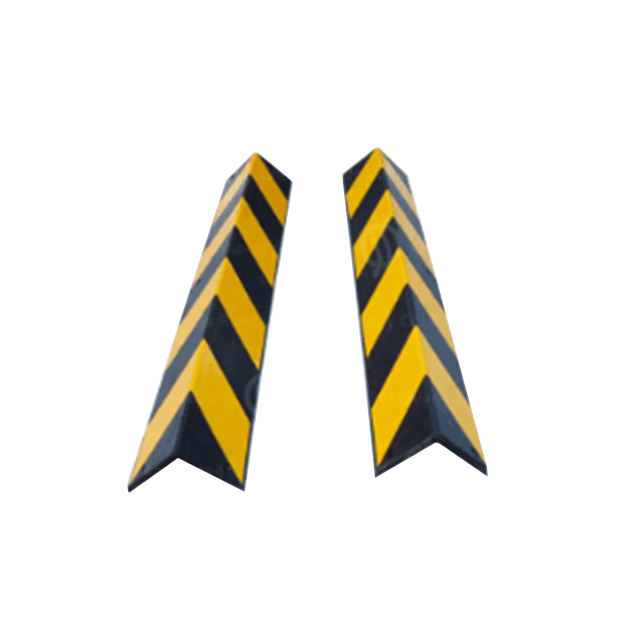
Material choice influences durability and installation speed. Concrete works well in high-traffic commercial lots because it resists repeated tire pressure. Rubber and recycled plastic offer lighter weight and faster installation, which benefits phased construction projects. Regardless of material, color matters. Yellow or white coatings increase visibility, especially at night. Reflective tape enhances safety in low-light environments such as garages or distribution centers where pedestrian movement remains constant.
ADA standards require accessible routes to maintain a minimum 36-inch clear width. A Wheel Stop must never reduce this clearance. When placed too close to sidewalks or paths of travel, it can obstruct wheelchair users or pedestrians with mobility devices. Installers must verify that it remains outside all designated accessible routes. Surfaces around the stop must stay smooth and level, without protruding edges that interrupt safe movement.
Access aisles next to accessible spaces require strict attention. Standard accessible stalls include a 5-foot access aisle, while van-accessible spaces require 8 feet. A Wheel Stop should never extend into these areas, even by small margins. When bumpers are required to prevent vehicle encroachment, maintain at least 2 feet of unobstructed space between the curb and the stop. This ensures van lifts deploy safely and wheelchair maneuvering remains unrestricted.
Accessible parking surfaces must not exceed 2.0 percent slope in any direction. Installing a Wheel Stop on uneven pavement can create surface irregularities that interfere with mobility devices. It should sit flush against the pavement without lips or hardware protrusion. Contrasting colors further support individuals with visual impairments. When slope and surface conditions meet standards, it supports both compliance and long-term safety.
Accurate measurement protects compliance. Use a measuring tape marked in 1/8-inch increments. Take three evenly spaced measurements across the feature being inspected. Evaluate each measurement individually instead of averaging them. Many inspection standards accept tolerance within 1/4 inch where permitted. This approach ensures every Wheel Stop meets dimensional and clearance requirements without relying on approximations.
After installing each Wheel Stop, confirm that access aisle widths remain intact. Measure from the edge of the stop to the aisle boundary to verify compliance. Check the 36-inch minimum clear route requirement near sidewalks and building entrances. Inspect nearby curb ramps to ensure alignment and unobstructed access. Even minor shifts can affect maneuvering space, so verification should occur before final approval.
Good documentation supports EEAT credibility and legal protection. Record measurements, take photos, and store installation details in project files. Keep ADA compliance verification forms when required. Include Wheel Stop inspection results within broader parking lot audits. When records show careful measurement and adherence to standards, property owners strengthen compliance confidence and reduce future disputes.
Preparation should follow measurable standards. Remove loose debris and oil to ensure full anchor grip strength. Inspect pavement for cracks wider than 1/4 inch, as weakened substrate reduces holding capacity. Confirm surface slope does not exceed 2.0% in accessible areas before positioning the Wheel Stop. Use a measuring tape to verify 3–6 inch setback from the stripe and center alignment within stall width. Accurate marking ensures consistent spacing across rows and prevents cumulative alignment errors.
Anchoring performance depends on embedment depth and substrate condition. For asphalt, rebar spikes typically penetrate 6–12 inches to resist lateral shear from vehicle impact. In concrete, drilled holes should match anchor diameter precisely to maintain expansion pressure. Use corrosion-resistant anchors in exposed environments. All hardware must remain flush with the surface to avoid trip hazards. Proper embedment and torque application prevent gradual loosening under repetitive loading cycles.
Inspection should include dimensional verification and load response checks. Measure accessible aisle width after installation to confirm no reduction below required 60 or 96 inches. Apply lateral force manually to detect movement; there should be no visible shift or rocking. Check that anchor heads remain fully recessed. Confirm the Wheel Stop remains perpendicular to striping and maintains the required 36-inch accessible route clearance. Thorough testing ensures long-term structural stability and ADA compliance.
Effective protection starts with calculating vehicle overhang. Most passenger vehicles extend 2 to 3 feet beyond the front axle, so a Wheel Stop must be positioned to account for this projection. Maintain at least 24 inches of clear space between the curb and bumper where required to preserve pedestrian flow. Avoid placing stops within 36-inch accessible routes. When located near storefronts, confirm doors can swing freely without obstruction, and ensure emergency egress paths remain fully clear.
High visibility improves reaction time for both drivers and pedestrians. Apply traffic-grade yellow or white coatings with strong contrast against asphalt. Reflective tape increases recognition under headlights, especially in enclosed garages. Parking lot lighting should provide uniform illumination across the full length of each Wheel Stop, reducing shadow zones that hide low-profile obstacles. In distribution centers or retail hubs, consistent visual cues support precise stopping and reduce low-speed impact incidents.
Precise coordination begins after final striping is complete. Measure stall width, typically 108 inches for accessible spaces, before anchoring the Wheel Stop. Center placement ensures balanced tire contact and prevents encroachment into access aisles. Confirm that blue aisle markings and accessibility symbols remain fully visible. When restriping occurs, re-check alignment to maintain perpendicular orientation and preserve required 36-inch accessible route clearances across the parking layout.
Keeping every Wheel Stop compliant requires more than casual observation. Inspection frequency, measurement standards, and documentation protocols must follow a structured cycle. The schedule below aligns practical maintenance routines with ADA dimensional requirements and surface safety benchmarks.
| Inspection Type | Frequency | Key Inspection Focus | Technical Measurement Standard | Tools Required | Compliance Threshold | Application Scenario | Documentation Requirement |
|---|---|---|---|---|---|---|---|
| Visual Surface Check | Monthly | Cracks, chips, displacement, anchor exposure | No visible structural separation or protrusion | Flashlight, visual survey | No exposed hardware above surface (0 in / 0 mm) | All parking facilities | Log date, inspector name, photo record |
| Alignment Verification | Quarterly | Lateral shift toward access aisle or sidewalk | Maintain 36 in (914 mm) accessible route clearance; 60 in (1524 mm) or 96 in (2438 mm) aisle width | Measuring tape (1/8 in increments) | No reduction below ADA minimum width | Accessible parking zones | Record three measurements per feature |
| Anchorage Stability Test | Quarterly | Rocking or movement under applied force | Manual push test; no perceptible movement | Hand pressure test | Zero rocking under moderate manual force | Asphalt and concrete installations | Note anchor condition and pavement integrity |
| Surface Slope Review | Annual or after resurfacing | Parking stall and aisle slope | Maximum 2.0% slope in any direction | Digital level (±0.1° accuracy) | ≤2.0% (0.02 ratio) | Accessible parking areas | Record three dispersed readings |
| Post-Severe Weather Inspection | After storms, freeze-thaw, seismic events | Anchor pullout, pavement cracking | Visual plus measurement verification | Measuring tape, digital level | No dimensional reduction or anchor loosening | Regions with extreme climate | Photo documentation required |
| Lighting & Visibility Review | Semi-Annual | Paint fading, reflective visibility | Maintain high contrast; repaint if coating loss exceeds visible coverage | Visual comparison under night lighting | Clear visibility at standard lot lighting levels | Commercial and retail lots | Maintenance log entry |
| Curb Clearance Check (if curb present) | Quarterly | Buffer between curb and wheel stop | Maintain 24 in (610 mm) unobstructed area where required | Measuring tape | ≥24 in maintained | Sidewalk-adjacent parking | Document measured clearance |
Tip:Re-measure access aisle widths after pavement repairs or sealcoating, as resurfacing can subtly shift reference lines and affect compliance.
Early detection requires more than visual checks. Inspect the Wheel Stop base for hairline cracks wider than 1/8 inch, as these may indicate freeze-thaw stress or repeated impact loading. Measure lateral displacement from the original stripe reference; movement greater than 1/2 inch suggests anchor fatigue. Check anchor heads for corrosion or surface lift. Apply moderate foot pressure to test for rocking. Even minor instability can gradually reduce ADA aisle clearance or affect 36-inch accessible routes.
Replacement decisions should follow condition-based assessment, not just age. When a Wheel Stop shows structural cracking through more than 25% of its length or repeated anchor pullout, replacement becomes cost-effective. Concrete units typically perform 15–25 years under normal traffic, while rubber units average 5–10 years in high-load zones. Plan replacements alongside sealcoating or restriping to avoid re-drilling. Always remeasure aisle width and slope after installation to confirm continued ADA compliance.
Wheel stops often protect sidewalks and building walls from vehicle overhang. In spaces adjacent to pedestrian routes, they prevent tires from entering clear paths of travel. A well-positioned Wheel Stop keeps vehicles contained while preserving required walkway widths. It reinforces both accessibility and pedestrian safety.
When integrating a Wheel Stop into off-street accessible parking, every inch matters. Stall width, access aisle clearance, and slope tolerances must remain intact after installation. The parameters below summarize critical technical requirements and how wheel stop placement must align with them to maintain ADA compliance and functional vehicle containment.
| Design Element | ADA Technical Requirement | Measurement Standard | Wheel Stop Placement Guidance | Application Context | Compliance Notes |
|---|---|---|---|---|---|
| Standard Accessible Car Stall Width | 108 inches (9 ft / 2743 mm) minimum | Measured between stall striping lines | Center wheel stop within stall width; do not reduce painted width | Retail centers, office buildings, medical facilities | Wheel stop must not extend laterally beyond stripe boundary |
| Standard Car Access Aisle Width | 60 inches (5 ft / 1524 mm) minimum | Clear, unobstructed width | Maintain full 60-inch clearance; wheel stop must not intrude | Adjacent to accessible car stall | Clearance must remain after anchoring and long-term use |
| Van-Accessible Stall Width (Option 1) | 108-inch stall + 96-inch aisle (2438 mm aisle) | Measured perpendicular to vehicle direction | Install wheel stop fully within stall depth; never within 96-inch aisle | High-traffic facilities with van users | 96-inch aisle must remain completely unobstructed |
| Van-Accessible Stall Width (Option 2) | 144-inch stall (12 ft / 3658 mm) with 60-inch aisle | Total stall width includes lift clearance | Wheel stop must align inside 144-inch boundary | Sites with limited aisle expansion room | Wider stall accommodates lift without aisle expansion |
| Parking Stall Length (Off-Street) | 216 inches (18 ft / 5486 mm) minimum | Measured from front stripe to rear boundary | Place wheel stop 3–6 inches behind front stripe to preserve full length | Standard perpendicular parking | Prevents vehicle overhang beyond curb |
| Required Unobstructed Area (If Bumper Used) | 24 inches (2 ft / 610 mm) between curb and bumper | Measured horizontally | Ensure wheel stop does not eliminate required curb buffer | Where curb protects sidewalk | Maintains maneuvering and door swing clearance |
| Surface Slope – Stall and Aisle | Maximum 2.0% in all directions | Measured with digital level (±0.1° accuracy recommended) | Confirm pavement slope before installation; wheel stop must sit flush | All accessible parking surfaces | Excess slope can invalidate compliance |
| Accessible Route Clearance | 36 inches (914 mm) minimum clear width | Measured continuous path | Ensure wheel stop does not project into route | From stall to building entrance | Applies to entire path of travel |
| Anchor Protrusion Tolerance | 0 inches above surface | Visual and tactile inspection | Anchors must be flush or recessed | Asphalt and concrete installations | Protrusions create trip hazards |
Tip:Proper integration requires measuring both before and after installation. Verify aisle width and stall dimensions again once anchors are secured to ensure no dimensional loss occurred during placement or fastening.
Proper coordination begins with understanding ramp geometry. A Wheel Stop should never be placed within the landing area of a curb ramp, which typically requires a 48-inch minimum clear space. Maintain full depth of detectable warning surfaces, commonly 36 inches measured along the ramp slope, without obstruction. Ensure the stop does not disrupt the 2.0% maximum cross slope requirement near ramps. Alignment should preserve a continuous, firm, and slip-resistant path from parking stall to sidewalk, supporting wheelchair stability and cane detection continuity.
Installing a Wheel Stop demands precise sizing, correct setback, and strict ADA clearance control. Careful measurement and routine inspection keep parking areas safe and compliant. Chengdu Rongxiang Technology Co., Ltd. delivers durable, high-visibility wheel stop solutions with stable anchoring systems and professional support, helping property owners enhance safety, extend service life, and ensure long-term regulatory compliance.
A: A typical Wheel Stop is 6 feet long, 4–6 inches high, and 8–10 inches wide for standard parking stalls.
A: Install a Wheel Stop 3–6 inches behind the front line to keep vehicles within the stall.
A: A Wheel Stop must not reduce the 36-inch accessible route or encroach on access aisles.
A: No. A Wheel Stop must never extend into 5-foot or 8-foot ADA access aisles.
A: Surfaces near a Wheel Stop must not exceed a 2.0% slope in accessible spaces.
A: Inspect each Wheel Stop monthly and verify ADA clearances quarterly.
 English


