Views: 0 Author: Site Editor Publish Time: 2026-06-08 Origin: Site
Deploying a traffic lane separator represents a critical infrastructure decision. You are not just laying down physical markers on asphalt. You are actively shaping facility liability, traffic flow efficiency, and long-term maintenance cycles. Many reflective roadway dividers look completely identical on paper. However, hidden differences drastically alter their real-world performance. Variations in material resilience and reflectivity grading dictate how well they endure daily abuse. Mounting mechanisms also play a massive role in asset longevity.
Facility managers often face a difficult decision-stage dilemma. Should they prioritize initial deployment speed or invest in heavy-duty, impact-resistant designs? Cheap alternatives often fail after a single harsh winter. Premium modules withstand repeated vehicle strikes. We built this guide to deliver a vendor-neutral evaluation framework. We cover crucial compliance standards, seasonal maintenance realities, and precise integration requirements. You will learn how to make evidence-based procurement decisions. By understanding these engineering nuances, you can avoid premature equipment failures. You will ensure your safety infrastructure operates flawlessly year-round.
Material dictates lifespan: Heavy-duty recycled rubber and impact-resistant plastics (like HDPE or PU) offer different trade-offs regarding flexibility, impact recovery, and weather resistance.
Compliance is non-negotiable: Selection must align with regional safety standards (e.g., MUTCD, ASTM Type III/IV reflectivity) and accessibility requirements (ADA compliance).
Hidden costs live in maintenance: True Total Cost of Ownership (TCO) must account for snow plow damage risks, replacement frequency, and surface-mount hardware degradation.
System integration matters: A traffic lane separator must work cohesively with existing traffic calming assets, temporary work zone markers, and parking lot constraints.
You must begin by clearly defining your operational goal. Infrastructure projects require precise categorization. We must delineate between temporary hazard mitigation and permanent infrastructure enhancement. Active work zones demand lightweight, rapidly deployable modules. Conversely, protected bike lanes require permanent, heavy-duty fixtures. Parking lot channelization demands robust longevity to survive constant low-speed impacts. Defining the specific scenario ensures you procure the exact right tool for the job.
Engineers must understand the difference between visual and physical deflection. A reflective roadway divider acts primarily as a high-visibility psychological barrier. It guides drivers subconsciously through visual cues. It offers secondary physical deflection during minor lane drifts. It is not a solid concrete barrier. It will not physically stop a speeding heavy commercial truck. Understanding this limitation prevents inappropriate deployments in high-speed, high-risk crash zones.
Procurement teams should establish strict metrics before purchasing any units. We recommend tracking specific Key Performance Indicators (KPIs) to measure ongoing success.
Accident Reduction: Measure how well the installation prevents dangerous cross-lane incursions. Count the reduction in sideswipe incidents over a six-month period.
Target Recognition: Evaluate visibility performance across diverse environmental conditions. Assess the reflectors in low-light environments, heavy rainstorms, or dark tunnel installations.
Asset Survivability: Monitor the physical endurance of the deployed units. Track their ability to withstand direct, high-angle vehicle strikes without requiring immediate replacement.
Choosing the right material changes everything about asset lifespan. Heavy-duty recycled rubber offers exceptional shock absorption. It minimizes structural damage upon vehicle impact. This material protects both the roadway infrastructure and the striking driver. Rubber modules usually weigh around 10 to 15 kilograms per section. This substantial weight ensures superior surface stability even before you tighten the anchor bolts. They resist shifting under heavy wind sheer from passing trucks.
Impact-resistant plastics provide distinctly different engineering benefits. Standard high-density polyethylene (HDPE) delivers rigid durability for controlled environments. Polyurethane (PU) grants extreme flexibility and superior impact recovery. Facilities utilizing a PU Safety Speed Hump for traffic calming will find familiar benefits here. They experience similar UV-resistant and weather-tolerant performance in PU-based lane separators. PU materials bounce back rapidly after crushing blows.
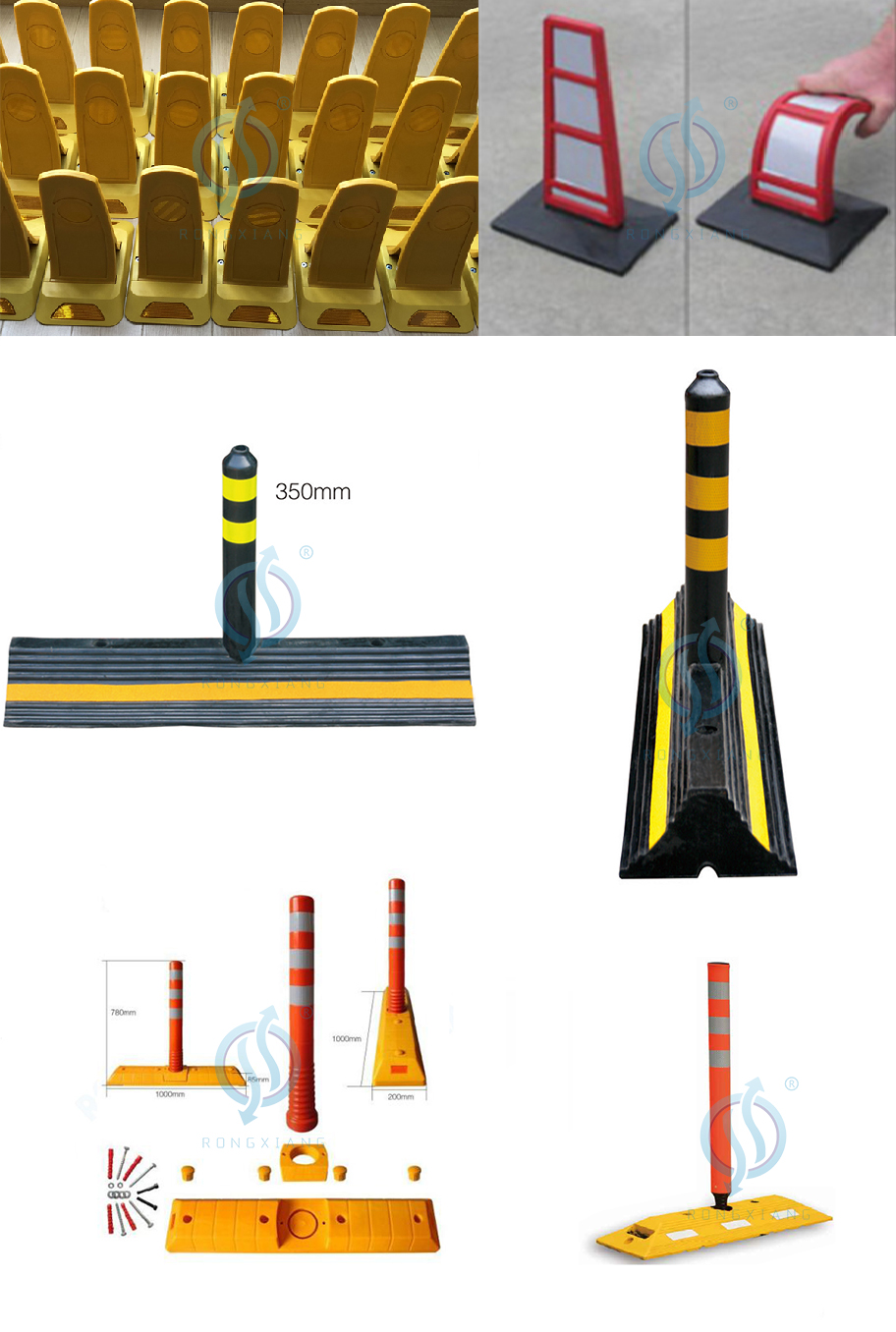
Minor design details heavily influence daily functionality. You need inset reflective tapes on the modules. Inset designs prevent friction scrape-offs from passing tire rubs. High-intensity glass eyes ensure maximum night visibility from long distances. Profile shape also matters immensely. "Humped" or ridged profiles safely redirect drifting tires. They gently push vehicles back into their designated lane. They do this rather than causing sudden, dangerous steering corrections.
Material Performance Comparison Chart | |||
Material Type | Flexibility Rating | Impact Recovery | Ideal Application Scenario |
|---|---|---|---|
Recycled Rubber | Moderate | Good (Absorbs shock) | Permanent urban bike lanes, heavy traffic zones. |
HDPE Plastic | Low (Rigid) | Poor (May crack under heavy load) | Temporary enclosures, low-speed restricted areas. |
Polyurethane (PU) | High | Excellent (Self-recovering) | High-impact zones, active intersections, industrial yards. |
Safety compliance remains an absolute requirement for any municipal or commercial installation. Infrastructure planners must verify minimum reflectivity standards. Always look for ASTM Type III or higher ratings on reflective sheeting. These grades ensure headlights bounce back effectively from long distances. For active highway work zones, you need specific crashworthiness certifications. MASH 2016 federal compliance guarantees the modules behave predictably during severe collisions.
The Americans with Disabilities Act (ADA) introduces vital deployment considerations. You cannot simply block pedestrian pathways. You must design layouts carefully around intersections.
Clearances: Maintain proper wheelchair clearances between modules at designated crossing points.
Trip Hazards: Utilize low-profile anchor bolts. Recess all mounting hardware to mitigate pedestrian trip hazards.
Visual Aids: Implement truncated domes near crosswalk terminations. Use high-contrast separator colors to aid visually impaired pedestrians.
Height selection dictates how the entire system functions. You must choose heights logically based on expected traffic modes. Low-profile designs measure approximately 50mm tall. They work perfectly for pedestrian-heavy zones or protected bike lanes. They allow emergency vehicles to carefully roll over them if necessary. High-profile designs measure 100mm or more. They enforce strict vehicle channelization. High profiles actively deter drivers from attempting to straddle the division line.
Installation methodology directly impacts your operational downtime. Surface mounting utilizes bolt-down hardware directly on asphalt or concrete. This non-destructive approach emphasizes rapid deployment. It gives site engineers incredible layout flexibility. You avoid costly excavation work entirely. Teams can install hundreds of meters in a single afternoon. If traffic patterns change, you simply unbolt the modules and relocate them.
Winter brings severe maintenance threats to any roadway hardware. Snow plow damage remains the leading cause of premature failure. Aggressive plow blades easily shear off rigid plastic markers. They rip anchor bolts straight out of the asphalt. You need solid mitigation strategies to survive the freezing months. Consider using flexible spring-base models. These units bend flat under the plow blade and pop back up safely. Alternatively, planners should manually remove temporary dividers just before the heavy snow season begins.
Fixed systems often require temporary supplementation during anomalies. During emergency realignments or active construction phases, teams need adaptable safety solutions. You can seamlessly integrate permanent fixtures alongside movable assets. For instance, fixed boundaries can be temporarily supplemented by a High Intensity Traffic Cone. This pairing safely guides drivers through sudden detours. It provides immediate visual authority while workers repair the main road surface.
Successful procurement relies on evaluating overall ecosystem integration. Buyers must vet their suppliers thoroughly before placing bulk orders. Look for proven manufacturing consistency. Prioritize vendors holding verifiable ISO 9001 certifications. Check their policies on manageable MOQs (Minimum Order Quantities). You might need just a few replacement units later. Ensure they offer guaranteed lead times for spare parts. Reliable suppliers keep your roadways functioning without forcing you into prolonged safety hazards.
Every piece of hardware must fit your broader site safety plan. Facility-wide asset synergy creates cohesive traffic management. Drivers respond better to uniform visual cues. A durable Traffic Lane Separator often operates perfectly alongside a Commercial Wheel Stop in parking structures. Together, they prevent dangerous curb overhangs and define clear driving lanes. This combined setup stops careless drivers from encroaching onto pedestrian walkways.
Industrial facilities demand even deeper integration. Forklifts and delivery trucks share tight spaces. In event spaces or warehouses, these dividers work parallel to a heavy-duty Cable Protector. This layout safeguards exposed high-voltage utilities without disrupting daily traffic flow. The separators guide the vehicles away from the sensitive utility lines. Every product must communicate the exact same visual language. Consistent yellow and black striping trains drivers to recognize hazard boundaries instantly.
Buying a reflective roadway divider remains a highly localized engineering decision. It depends heavily on specific traffic speeds. It relies on your local weather conditions and strict municipal compliance requirements. No single material or profile fits every scenario perfectly. You must audit your proposed installation site first. Gather precise local speed data. Map out your local snow plow routes carefully.
We recommend requesting material samples before finalizing any bulk order. Test these samples directly in your actual environment. Strike them with maintenance vehicles. Monitor their visibility during a rainstorm. This proactive approach ensures you build a durable and highly visible safety network. You will ultimately protect your pedestrians, streamline your vehicle flow, and drastically reduce your seasonal maintenance headaches.
A: The lifespan varies heavily by material type and strike frequency. Heavy-duty rubber modules typically last 2 to 5 years in high-traffic zones. Premium polyurethane (PU) or high-impact plastics can survive 7 or more years in strictly controlled, low-speed areas.
A: Yes. Surface-mount designs utilize heavy-duty anchor bolts. Maintenance crews can easily unbolt the units, extract the hardware, and reposition them elsewhere. This non-destructive modularity makes them ideal for pilot road redesigns and temporary traffic experiments.
A: The primary difference involves directional orientation and purpose. Separators run parallel to traffic flow to divide lanes and prevent horizontal crossing. Speed bumps run perpendicular to the traffic flow to physically force vehicles to slow down.
 English