
Views: 0 Author: Site Editor Publish Time: 2026-04-23 Origin: Site
Traffic calming often forces a tough choice between physical safety and architectural aesthetics. Facility managers, municipal planners, and commercial developers face this challenging balancing act daily. You must strictly enforce traffic speeds to protect pedestrians. However, you likely want to avoid ruining beautiful environments with ugly, high-visibility street hardware. Traditional painted rubber or poured asphalt solutions typically suffer from rapid visual degradation. They experience severe structural wear under heavy loads. These aging fixtures demand constant repairs and high maintenance budgets.
We introduce a modern alternative: the TPU Speed Hump. This premium, high-performance product physically manages vehicle speeds effectively. It provides exceptional durability without adding visual clutter to your pristine streets. An unmarked design blends seamlessly into upscale locations. In this guide, you will discover the unique mechanics of thermoplastic polyurethane. We will explore deployment strategies, safety compliance, and installation best practices. Read on to transform your approach to modern traffic safety.
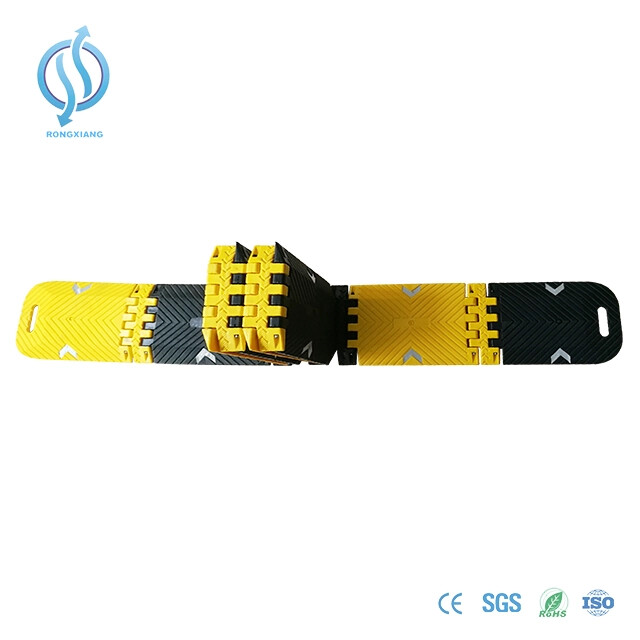
Material Superiority: Thermoplastic Polyurethane (TPU) outperforms standard rubber in load-bearing capacity, chemical resistance, and lifespan.
Aesthetic Integration: An unmarked design enforces tactile speed reduction while blending seamlessly into premium environments.
Targeted Application: Engineered for dual-use efficacy across both high-traffic commercial zones and noise-sensitive residential communities.
Cost Efficiency: Higher upfront material cost is offset by extreme UV resistance and zero paint-maintenance requirements, lowering Total Cost of Ownership (TCO).
Road safety does not require bright yellow visual noise. Corporate campuses, luxury estates, and historic districts demand beautiful, cohesive surroundings. High-contrast painted hardware often ruins these carefully planned environments. We view the unmarked layout not as a safety hazard. Instead, it serves as a deliberate aesthetic strategy. It calms traffic while preserving environmental elegance. You can protect pedestrians without sacrificing the visual integrity of your property.
Physical speed regulators rely heavily on tactile enforcement rather than visual warnings. A physical elevation change forces drivers to slow down naturally. Vehicles instinctively decelerate to 10–15 mph upon feeling the pavement shift. This physical reaction happens regardless of high-visibility striping on the device itself. As long as you provide compliant advance signage, the tactile feedback ensures compliance. Drivers feel the physical barrier. They slow down automatically to avoid discomfort or vehicle damage.
Brightly painted rubber hardware demands constant, repetitive maintenance. Heavy vehicle traffic quickly scrapes away yellow or white surface paint. You must organize crews to repaint these faded sections bi-annually. This recurring chore wastes significant labor hours and facility budgets. Removing painted sections entirely eliminates this frustrating maintenance cycle. You save valuable time and resources immediately. Your maintenance teams can focus on more critical facility upgrades.
Selecting the right underlying material determines your long-term success. Thermoplastic Polyurethane (TPU) offers profound molecular advantages for outdoor applications. It delivers exceptional tensile strength across extreme temperature variations. It also resists tearing far better than standard recycled rubber. Vulcanized rubber easily degrades under constant stress. It crumbles when subjected to aggressive braking forces. TPU maintains its structural integrity under immense pressure. It flexes slightly and returns to its exact original shape.
Prolonged sun exposure eventually destroys most outdoor installations. Ultraviolet rays cause severe cracking, chalking, and fading in standard rubber compounds. A UV resistant TPU formula prevents this environmental degradation entirely. It survives harsh sunlight year after year. The material retains its original color depth and flexibility. You will not see the brittle surface cracking common in older rubber units.
Roadways constantly expose hardware to harsh chemical spills. Motor oil, gasoline, and engine antifreeze frequently leak onto the pavement. Winter maintenance introduces highly corrosive road salts and chemical de-icers. These toxic substances rapidly destroy standard porous rubber. TPU inherently resists these aggressive automotive fluids. It survives harsh environmental contamination effortlessly. Fluids simply wash away during the next rainstorm.
Repeated heavy-duty vehicle traffic requires massive compression recovery capabilities. We evaluate materials based on their specific load-bearing dynamics. The structural unit must compress slightly under weight and rebound instantly. TPU excels at this rapid structural recovery. It handles heavy transit buses and waste vehicles without permanent deformation.
Performance Metric | Standard Rubber | Thermoplastic Polyurethane (TPU) |
|---|---|---|
Tensile Strength | Low to Moderate; prone to tearing | Exceptionally High; resists shearing forces |
Chemical Resistance | Poor; absorbs oils and degrades | Excellent; repels automotive fluids and salts |
Weathering | Fades, cracks, and chalks in sunlight | Highly stable; prevents structural cracking |
Load Recovery | Sluggish; flattens permanently over time | Instantaneous; maintains original parabolic shape |
Aesthetic Lifespan | Short; requires frequent paint touch-ups | Long; solid coloring requires no repainting |
Different geographic locations require highly targeted safety strategies. You must adapt the physical installation to the specific environment. What works for a shipping depot will fail in a quiet neighborhood.
Neighborhoods prioritize quiet streets and maximum pedestrian safety. You need to protect young children playing near the road. You also must strictly preserve neighborhood aesthetics and property values. Standard hard plastic devices create loud, irritating "clanking" noises. Heavy vehicles striking hollow metal regulators easily wake up sleeping residents. These noise complaints frustrate Homeowner Associations endlessly.
TPU features incredible structural shock-absorbing qualities. It heavily softens the impact of rolling vehicle tires. This significantly reduces airborne noise pollution. It creates a safer, quieter living environment for everyone. The subtle physical appearance also pleases strict architectural review boards. It blends into the asphalt quietly. Residents appreciate the safety without the industrial aesthetic.
Industrial business parks and bustling shopping centers face different challenges. Success means handling continuous daily traffic volume safely. You must accommodate fully loaded delivery trucks daily. You also need to minimize liability risks regarding vehicle damage.
TPU units feature a highly convenient modular nature. They allow for highly custom-width configurations. You can span wide commercial thoroughfares effortlessly. You can also securely protect specific warehouse loading dock approaches. The interlocking design ensures stability under extreme lateral forces. Eighteen-wheelers can turn sharply on them without dislodging the hardware.
Follow these essential deployment principles for optimal success:
Assess the daily vehicle weight averages before ordering materials.
Measure exact lane widths to determine required modular piece counts.
Determine the required noise reduction level for the surrounding buildings.
Identify specific drainage paths to prevent localized street flooding.
Safety compliance strongly protects pedestrians and property owners alike. You must align your installations with accepted urban engineering standards. The National Association of City Transportation Officials (NACTO) provides clear, authoritative guidance. Vertical speed control elements require highly specific physical dimensions. A smooth parabolic shape ensures safe vehicle navigation.
Typical compliant designs measure 3–4 inches high at the center peak. Travel lengths usually span 12–14 feet across the roadway. This gradual profile forces necessary deceleration safely. It prevents sudden, dangerous jolts. It drastically reduces the risk of undercarriage vehicle damage. Drivers experience a gentle, elongated lifting motion instead of a sharp shock.
Emergency medical responders require rapid access through neighborhoods. Fire apparatus and heavy ambulances cannot tolerate severe travel delays. You must plan your strategic placement carefully. Spacing requirements dictate safe emergency vehicle clearance. You can leave strategic gaps in the center of the roadway. Some urban planners utilize specific profiles tailored for wide fire truck wheelbases. This allows emergency vehicles to pass smoothly while slowing standard passenger cars.
An unpainted design heavily requires compensatory safety measures elsewhere. You cannot install invisible road hazards legally. You must pair subtle physical installations with vertical advance warning signage. The Manual on Uniform Traffic Control Devices (MUTCD) outlines these specific standards. Compliant signage maintains strict legal liability protection for property owners. Proper signage alerts approaching drivers well before they reach the physical hump. It ensures they brake smoothly and predictably.
Proper installation guarantees long-term performance and structural stability. You must accurately address specific substrate requirements first. Asphalt and concrete surfaces demand entirely different anchoring techniques. Solid concrete requires expanding metal shields and heavy-duty lag bolts. Asphalt installations often utilize specialized epoxy and different specialized anchors. You must evaluate the existing pavement condition beforehand. Crumbling asphalt cannot securely hold heavy-duty masonry anchors.
Interlocking modular pieces present unique assembly risks during installation. Precision truly matters during the initial roadway layout. You must align each individual section perfectly. Poor alignment causes hazardous shifting under multi-ton loads. We strongly recommend laying out all pieces before drilling any holes. Secure the central pieces first. Work your way outward slowly toward the road edges. Ensure every interlocking tab seats fully before tightening the bolts.
Poured asphalt forms an inflexible, permanent road fixture. Conversely, TPU modules offer excellent seasonal portability. You can easily unbolt and relocate them anytime. Road resurfacing projects require totally clear pavement. Winter snowplow routing demands completely unobstructed travel lanes. You can remove the units temporarily before the first freeze. You store them safely indoors until spring arrives. This distinct flexibility provides a massive advantage over permanent asphalt structures.
Effective traffic calming requires careful planning and smart material investments. You now understand the profound structural benefits of modern polyurethane materials. You can easily protect pedestrians without sacrificing your property's architectural beauty.
To move your safety project forward, take these actionable next steps:
Conduct a comprehensive site audit to identify critical speeding hot spots.
Measure your exact required road widths to calculate modular unit needs.
Assess your unique aesthetic constraints with local property management boards.
Calculate daily traffic volume and maximum expected vehicle weights.
Review local signage compliance regulations regarding vertical deflection devices.
Request technical specification sheets from qualified B2B manufacturers.
A: Deploying unmarked devices on public municipal roads usually requires strict city approval. Municipal roads must adhere tightly to local DOT visual guidelines. However, private roads, commercial properties, and gated communities have more flexibility. You can legally use unmarked designs on private property if you install MUTCD-compliant advance warning signs. Proper vertical signage fulfills the legal requirement to warn drivers of upcoming roadway changes.
A: TPU handles sub-zero freezing temperatures exceptionally well without cracking. It resists damage from road salts and chemical de-icers. However, heavy mechanized snowplows will destroy any raised surface hardware. We highly recommend unbolting and removing modular units before the winter plowing season begins. Their portability makes this temporary removal fast and straightforward.
A: Commercial-grade TPU boasts massive load-bearing capabilities. It easily accommodates average industrial expectations. High-quality units routinely support continuous rolling loads exceeding 20 to 40 tons. This high capacity makes them perfectly suitable for heavy fire trucks, loaded delivery vans, and commercial freight vehicles. They compress slightly under load and rebound instantly without structural damage.
A: A standard lane installation proceeds very quickly with the right tools. A prepared two-person crew can complete a single lane in 1 to 2 hours. You need a proper industrial rotary hammer drill, appropriate masonry bits, and a heavy-duty impact wrench. Pre-planning the layout and ensuring a clean substrate significantly speeds up the entire drilling process.
 English


